
Quick Summary:
- A dryer that runs but produces no heat is usually caused by a blown thermal fuse, broken heating element, or clogged vent.
- Gas and electric dryers have different components; the repair approach varies by type.
- Some fixes are DIY-friendly; others require a licensed appliance repair technician.
- Ignoring the problem can damage clothing, waste energy, or create a fire hazard.
- Homeowners in Livonia, MI, have access to local appliance repair professionals for fast diagnosis.
What Does It Mean When a Dryer Is Not Heating?
A dryer not heating means the drum spins normally, but the air inside stays cold or lukewarm, so clothes come out damp no matter how long the cycle runs. This is one of the most common appliance complaints among homeowners.
The dryer’s heating system relies on several components working together: a heating element or gas burner, a thermal fuse, a thermostat, and proper airflow through the vent. When any one of these fails, heat disappears entirely. Understanding which part failed determines whether this is a quick fix or a job for a professional.
Top Causes of a Dryer Not Heating
1. Blown Thermal Fuse
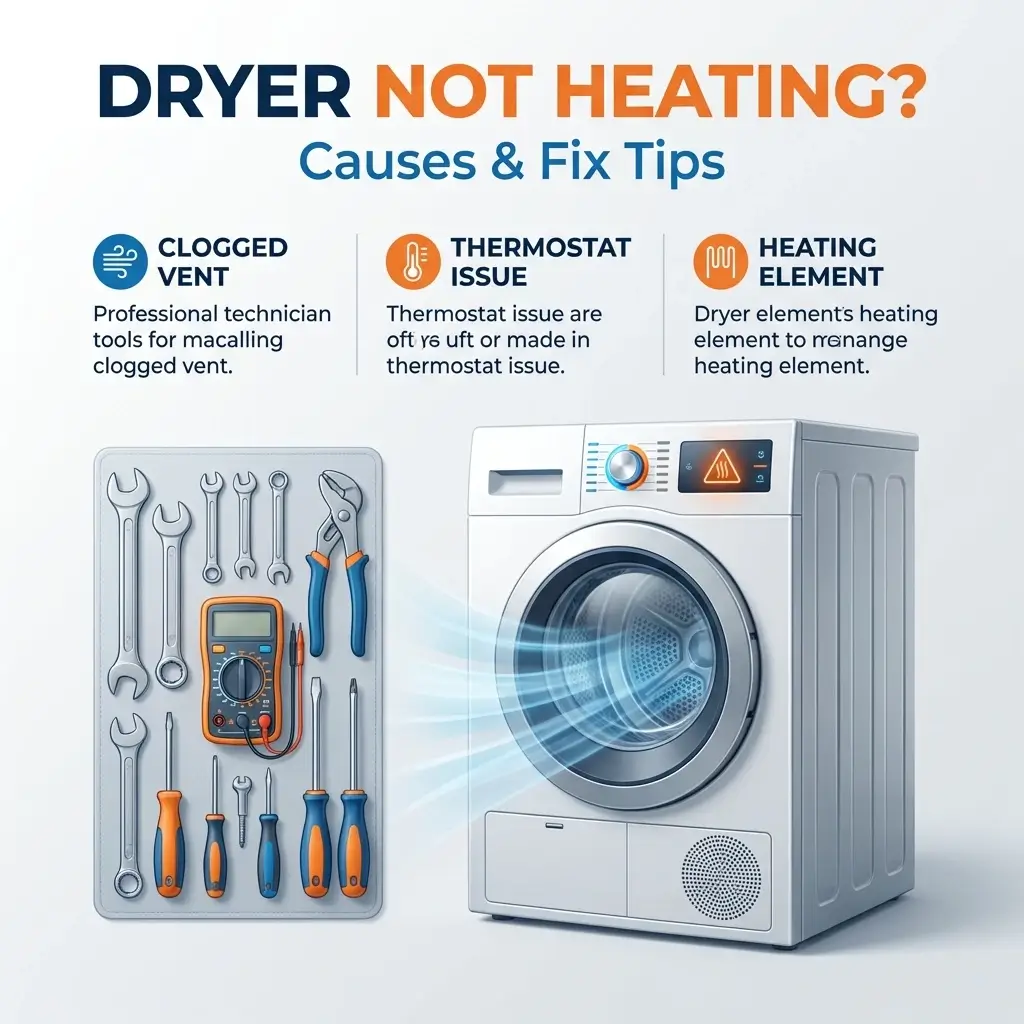
The thermal fuse is a small safety device designed to blow if the dryer overheats. Once it blows, it cuts off heat permanently. The dryer will still tumble, but it will never heat again until the fuse is replaced.
A blown thermal fuse is the single most common cause of a dryer not heating. According to appliance repair data, thermal fuse failure accounts for roughly 75% of no-heat dryer calls. It costs very little to replace, but the root cause, usually a clogged vent, must also be addressed or the new fuse will blow again quickly.
2. Broken Heating Element (Electric Dryers)
Electric dryers use a coiled metal heating element to generate heat. Over time, this coil can break or burn out, cutting off heat production entirely. A broken heating element is the second most common cause in electric models.
Testing a heating element requires a multimeter. If there is no continuity in the coil, replacement is necessary. This is a moderately involved repair, manageable for a confident DIYer, but faster and safer with a technician.
3. Dryer Vent Clogged
A clogged dryer vent is both a heating problem and a fire hazard. When the exhaust vent is blocked by lint buildup, the dryer overheats, triggers the thermal fuse, and shuts down heat as a safety measure.
Clothes taking longer than usual to dry is often the first sign of a developing vent blockage. The U.S. Fire Administration reports that clogged dryer vents cause approximately 2,900 house fires annually. Cleaning the vent line from the dryer to the exterior of the home is an essential part of any no-heat repair.
4. Faulty Cycling Thermostat
The cycling thermostat regulates temperature throughout the drying cycle. When it fails, the dryer either overheats and shuts off or produces no heat at all. Unlike the thermal fuse, a bad thermostat may cause intermittent heating problems rather than a complete failure.
5. Failed Gas Valve Solenoid (Gas Dryers)
In gas dryers, the gas valve solenoid coils open the valve to allow gas flow to the burner. When one or more coils fail, the burner ignites briefly or not at all and the dryer runs cold.
Gas dryer repair involving the valve, igniter, or gas line should always be handled by a qualified technician. Working with gas components without proper training creates a serious safety risk.
6. Tripped Circuit Breaker (Electric Dryers)
Electric dryers run on a 240-volt double-pole circuit breaker. If one leg of that breaker trips, the dryer may still tumble on 120 volts, but it loses the power needed to heat. Check the breaker panel before assuming a component has failed.
Reset the breaker fully. If it trips again immediately, there is an electrical problem that requires an electrician, not just an appliance repair call.
If you are finding an appliance repair technician in Livonia, first look at this guide: What to Expect on Your First Appliance Repair Service Call.
Gas Dryer vs. Electric Dryer: Does the Repair Differ?
Yes, the heating components are entirely different.
Electric dryers use a heating element and rely on consistent electrical supply. When heat fails, the issue is almost always the element, thermal fuse, or thermostat.
Gas dryers use a burner igniter, gas valve solenoids, and a flame sensor. These components are less expensive individually, but any repair involving the gas supply line requires a licensed technician. Attempting gas appliance repairs without proper training is dangerous and, in many jurisdictions, a code violation.
Both types share the thermal fuse and venting system, so a clogged vent can cause no-heat problems in either model.
How to Diagnose a Dryer Not Heating | Step by Step
- Check the vent first: Disconnect the vent hose from the back of the dryer and run a short cycle. If heat returns, the vent is blocked.
- Inspect the circuit breaker: For electric dryers, confirm both poles of the breaker are fully on.
- Test the thermal fuse: Use a multimeter set to continuity. No continuity means the fuse is blown and must be replaced.
- Test the heating element: On electric models, test the element for continuity. A break in the coil requires replacement.
- Check the thermostat: A faulty cycling thermostat will show no continuity when tested at room temperature.
- For gas dryers – call a technician: If the igniter, valve solenoids, or gas supply are involved, professional service is the right call.
When Should You Call an Appliance Repair Technician in Livonia, MI?
Call a technician when:
- The dryer involves gas components of any kind
- The circuit breaker keeps tripping after being reset
- Multiple components have failed at the same time
- The dryer is less than 5 years old and still under warranty
- DIY diagnosis did not identify a clear, single cause
Attempting complex repairs on a dryer that is still under manufacturer warranty can void coverage. A qualified appliance repair technician in Livonia, MI, can diagnose the problem quickly, source the correct part, and complete the repair in a single visit in most cases.
People Also Ask
The most likely causes are a blown thermal fuse, a broken heating element (electric), or a failed gas valve solenoid (gas). A clogged dryer vent can also trigger the thermal fuse and cut off heat. Start by checking the vent and testing the thermal fuse with a multimeter.
Yes. A blocked vent traps hot air inside the dryer, causing it to overheat and blow the thermal fuse as a safety measure. Once the fuse blows, the dryer stops producing heat entirely. Clearing the vent and replacing the fuse together resolves this; fixing only one without the other means the problem returns quickly.
In most cases, yes. A thermal fuse, heating element, or thermostat replacement costs significantly less than a new dryer. If the appliance is more than 10 years old and multiple components have failed, a technician can give you an honest cost comparison between repair and replacement.
A dryer heating element typically lasts 8 to 12 years under normal use. Frequent overloading, restricted airflow, and running extremely long cycles shorten its lifespan. Regular vent cleaning is the single best way to extend the life of the heating element and thermal fuse.
Conclusion: Don’t Ignore a Dryer That Won’t Heat
A dryer not heating is almost always fixable, and in most cases, the cause is one of a small number of well-known components: a blown thermal fuse, broken heating element, clogged vent, or faulty thermostat. Identifying the right part early saves time, money, and the risk of a more serious problem developing.
For homeowners in Livonia, MI dealing with a dryer not heating, a local appliance repair technician can diagnose and fix most no-heat problems the same day. If the dryer involves gas, if the breaker keeps tripping, or if basic tests have not identified the problem, professional service is the right next step.