
A washing machine rarely quits without warning. Most give you clear signals days or weeks before a full breakdown. Catch these early and you often turn a costly failure into a simple fix. Ignore them and you risk a flooded laundry room, damaged floors, or a machine beyond saving. Below you will find the warning signs that mean your washer needs attention now, what part is likely failing, error codes decoded, self checks you can try today, and the point where it makes sense to call for professional washing machine repair in Livonia MI.
Short on time? Here is the fast version.
- Most urgent signs: water leaks, no draining, no spin, burning smells, and repeated mid cycle stops.
- Safe self checks: rebalance the load, clear the drain hose and pump filter, level the machine, and run a reset.
- Call a pro when: a symptom returns after a reset, you smell burning, or the fault sits in the motor, bearings, or control board.
- Repair or replace: if the fix costs less than half the price of a new washer and the unit is under 10 years old, repair usually wins.
A washing machine needs immediate repair when it will not drain, leaks water, refuses to spin, makes loud grinding or banging noises, or stops mid cycle. Each points to a failing part like the drain pump, drive belt, lid switch, or bearings. Fast action prevents water damage and larger bills.
Why Early Action Matters
Washers and dryers get repaired successfully in the large majority of cases when a pro sees them early, before a small fault spreads to nearby parts. A worn bearing left alone can chew through a drum. A slow drip can warp a floor. Treating the first symptom is almost always cheaper than waiting for the machine to die. That is the mindset behind every sign below.
Sign 1: The Washer Will Not Drain
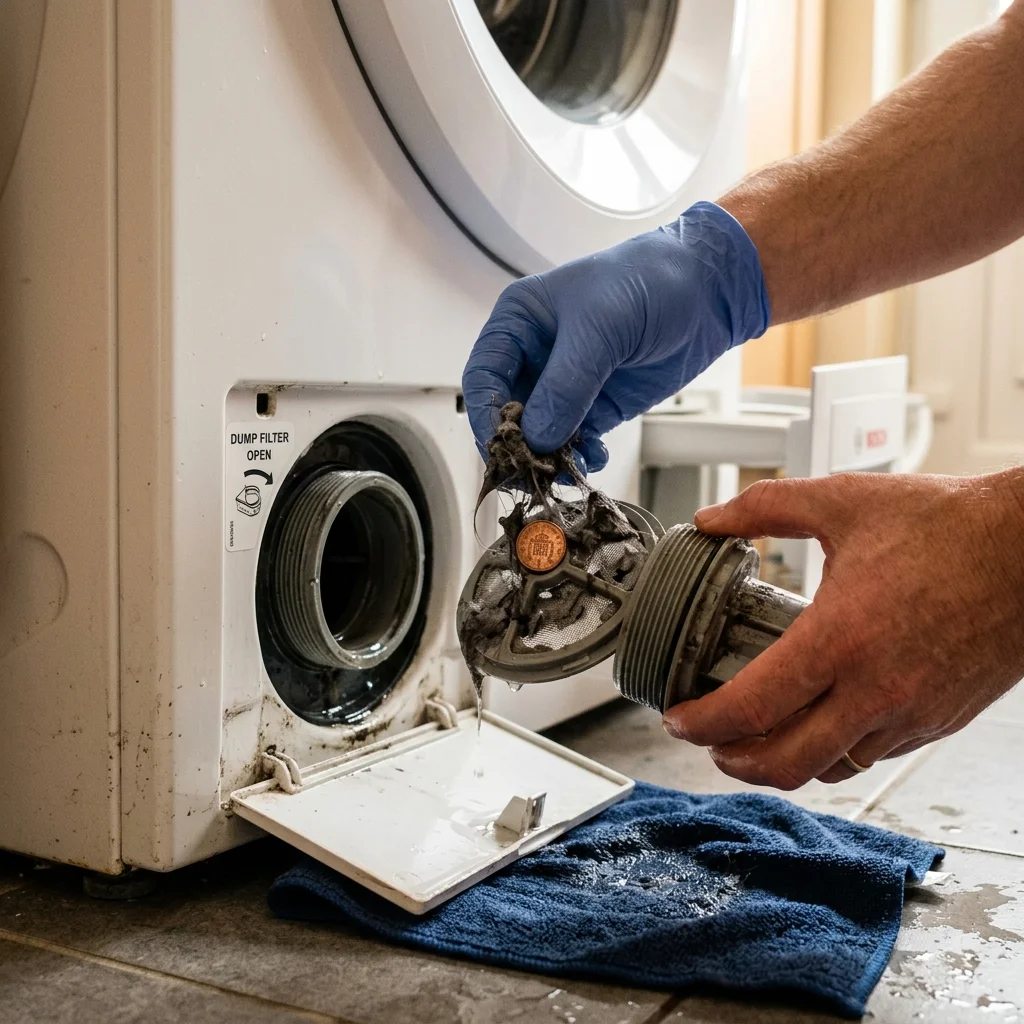
You open the door and water still sits in the drum. Draining and spinning work together, so a drain fault usually stops the spin too, which leaves your laundry soaking wet.
Likely cause: A clogged drain hose, a blocked drain pump, or a small item like a sock or coin stuck in the filter.
Try this first: Power off the machine. Inspect the drain hose for kinks or clogs, then find the pump filter, often behind a small panel near the bottom of a front load washer, and clear any debris. Keep a towel and shallow pan ready, since water will spill when you open the filter.
Call a pro when: The filter and hose are clear but water still pools. A failing pump or control board needs a trained hand.
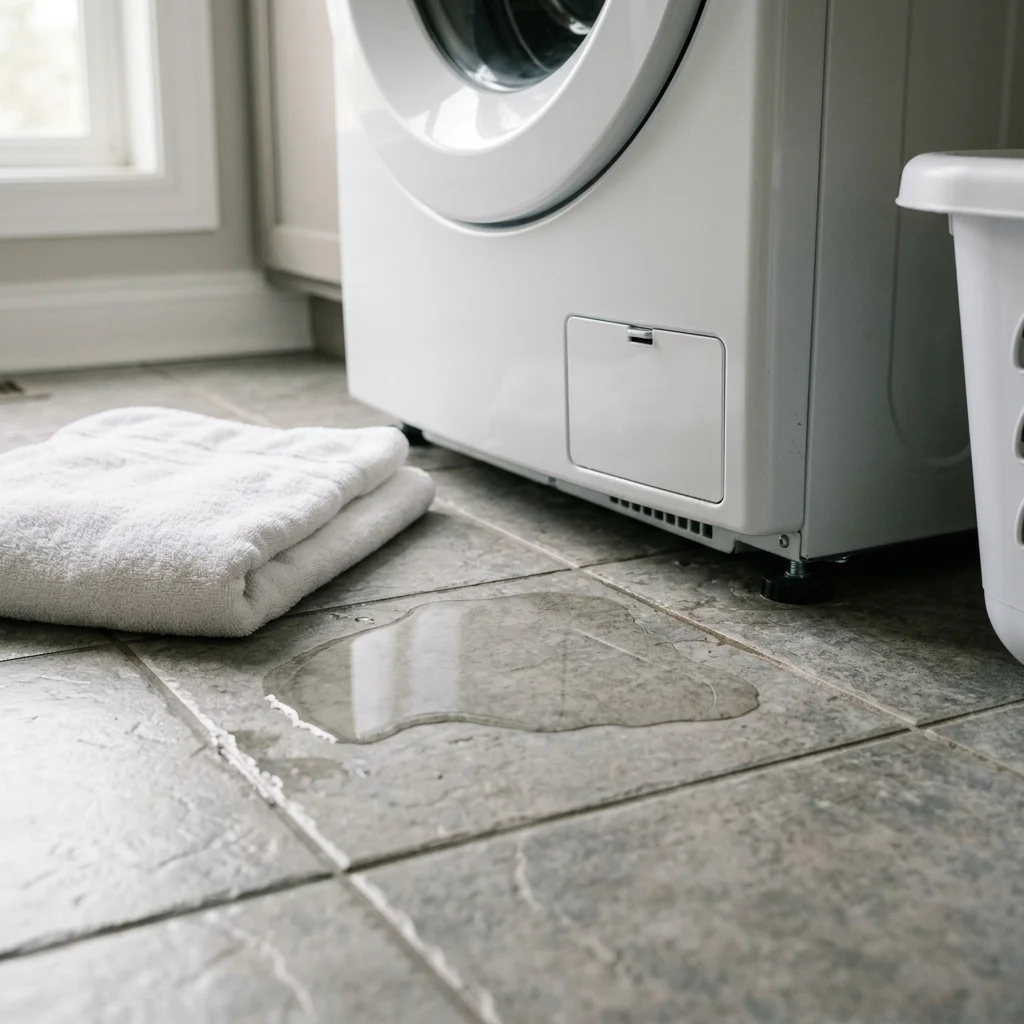
Sign 2: Water Leaks Around the Machine
A puddle under or behind the washer is a red flag. Water seeps into floors and drywall fast, and it invites mold within days.
Likely cause: A worn door seal, a cracked or loose hose, or a faulty water inlet valve. Front load machines often leak from the rubber door gasket. Top load models tend to leak from hose connections.
Try this first: Dry the area, run a short cycle, and watch where the water appears. Inspect the hose connections at the back and tighten any that feel loose.
Call a pro when: The leak returns, comes from inside the machine, or you cannot spot the source. Seals and inlet valves are best replaced by a technician.
Sign 3: The Drum Will Not Spin
Your laundry comes out heavy and dripping because the drum never reached full speed.
Likely cause: A broken drive belt, a faulty lid switch or door latch, a worn motor coupling, or a simple unbalanced load. Modern washers pause the spin as a safety step when the lid reads as open.
Try this first: Redistribute the load so it sits evenly, then restart. Confirm the lid or door clicks fully shut.
Call a pro when: A balanced load still will not spin. Belt, latch, and motor work calls for professional washing machine repair.
Sign 4: Loud Grinding, Banging, or Squealing
A healthy washer hums. Harsh noises mean metal is meeting metal or a part has come loose. The exact sound points to the culprit.
| Noise | Likely cause | What to do |
| Grinding | Worn drum bearings or motor issue | Stop use, book a pro |
| Banging | Unbalanced load or worn suspension | Rebalance, level the unit |
| Squealing | Slipping or worn drive belt | Have the belt inspected |
| Rattling | Loose object between the tubs | Check drum for coins or wire |
Try this first: Stop the machine and check the drum for a stray coin, wire, or button. Confirm the washer sits level on all four feet, since a tilt causes banging.
Call a pro when: The noise continues on an empty, level machine. Worn bearings grow worse and can damage nearby parts, so book a repair early.
Sign 5: The Washer Stops Mid Cycle
The machine starts, then quits partway through, sometimes with an error code on the display.
Likely cause: A control board fault, a failed door latch, a drainage block, or a bad water level sensor. Many washers halt the spin when they sense leftover water or an open lid.
Try this first: Note the error code and check your manual. Close the lid firmly, clear any drain block, and reset the machine by unplugging it for five to ten minutes.
Call a pro when: The machine keeps stopping after a reset. Sensor and control board issues need proper diagnostics.
Sign 6: A Burning or Electrical Smell
A burning odor is the one sign you never wait on. It often points to an overheating motor or a failing drive belt.
Likely cause: A seized motor, a worn belt rubbing against a pulley, or an electrical fault in the wiring.
Try this first: Shut the machine off and unplug it right away. Do not run another cycle.
Call a pro when: Always, for a burning smell. Electrical faults are a safety risk and belong to a certified technician.
Sign 7: The Washer Vibrates or Walks Across the Floor
Some movement is normal. A washer that shakes hard or creeps away from the wall is not.
Likely cause: An unbalanced load, uneven feet, worn suspension rods, or a floor that is not level.
Try this first: Spread the load evenly and adjust the leveling feet until the unit sits firm. Add a towel or two to balance a single heavy item.
Call a pro when: The shaking continues on a balanced, level machine. Worn suspension rods or shock absorbers need replacing.
Sign 8: The Water Is Not the Right Temperature
Clothes that come out with detergent residue or feel colder than the cycle set often signal a fill or heating fault.
Likely cause: A faulty water inlet valve, a clogged inlet screen, or a bad temperature sensor. Underfilling leaves clothes poorly rinsed.
Try this first: Check that both hot and cold supply valves are fully open and the inlet hoses are not kinked. Clean the small mesh inlet screens if they hold sediment.
Call a pro when: Supply lines are clear but the temperature stays wrong. Inlet valve and sensor work is a pro job.
Sign 9: Error Codes Keep Appearing
Modern washers flash codes to point you at the failed subsystem. A code that returns after a reset signals a real fault. Here are the common ones by brand, drawn from manufacturer guides.
| Code | Brands | Meaning | First check |
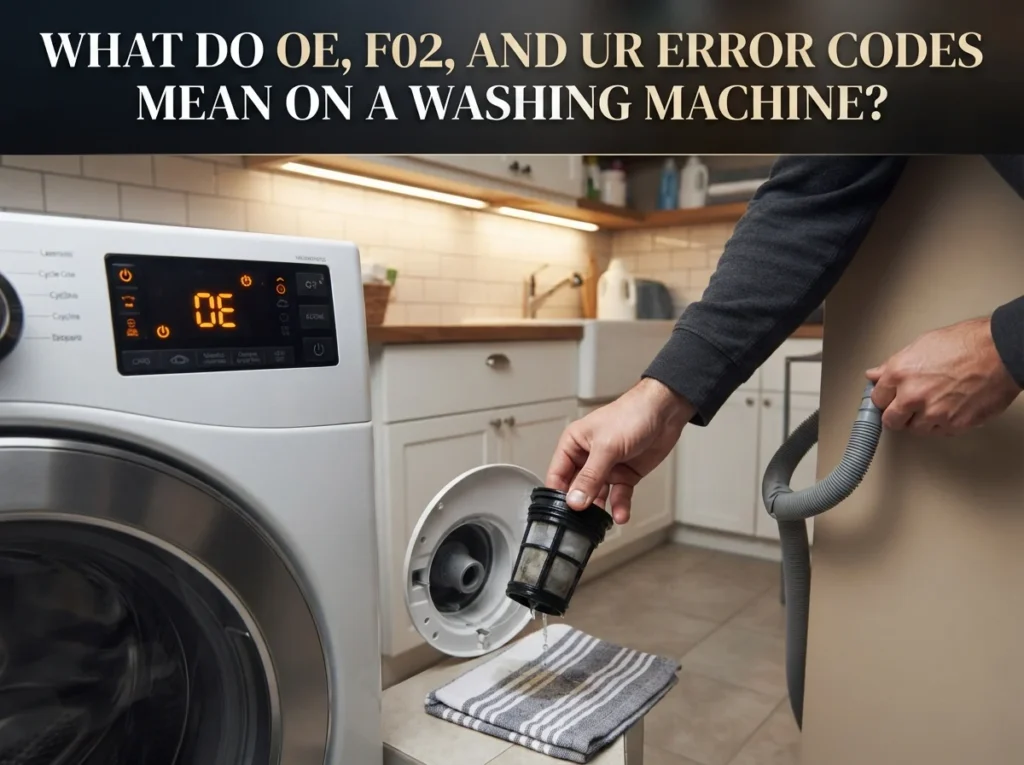
| OE / 5E / 5C / F9 E1 | LG, Samsung, Whirlpool | Will not drain | Drain hose and pump filter |
| IE / 4C / 4E / F8 E1 | LG, Samsung, Whirlpool | Water not filling | Supply valves and inlet screens |
| UE / Ub / dc | LG, Samsung | Unbalanced load | Redistribute and level |
| LE / F7 E1 | LG, Whirlpool | Motor or rotor fault | Reset, then call a pro |
| dE / F5 E2 | Samsung, Whirlpool | Door will not lock | Close door fully, clear seal |
| Sud / Sd | Most brands | Too many suds | Use less HE detergent |
Try this first: Write down the exact code, then unplug the washer for five to ten minutes to clear a ghost fault. Run an empty rinse and spin.
Call a pro when: The same code returns. A repeat code means the part behind it has failed, not glitched.
Sign 10: Clothes Come Out Still Dirty or Soapy
When a full cycle leaves clothes gritty, soapy, or barely rinsed, the machine is not moving water the way it should.
Likely cause: A clogged filter, a failing pump, a worn inlet valve, or a sensor that misreads water levels. Overloading also blocks proper washing.
Try this first: Run a smaller load with the right amount of HE detergent. Clean the drum and check the filter.
Call a pro when: Correct loads still come out unclean. The fault likely sits in the pump, valve, or sensor.
Front Load and Top Load Washers Show Different Clues
Front load units often flag door seal leaks, pump filter clogs, and worn shock absorbers. Top load models more often show lid switch, drive belt, agitator, or suspension rod trouble. Knowing your type helps you and your technician zero in faster and quote more accurately.
Repair or Replace? Use the 50 Percent Rule
Most washers last about 10 years. A widely used guide is the 50 percent rule.
| Situation | Best move |
| Under 8 years, repair below half of new price | Repair |
| 8 to 10 years, moderate repair | Judgment call, weigh reliability |
| Over 10 years, major part failing | Replace |
| Repair over half the price of new | Replace |
Age and repair history guide the call as much as the quote. A certified technician can give you an honest read before you spend.
What a DIY Fix Can and Cannot Cover
Some upkeep is safe for any homeowner. Deeper work is not, both for safety and warranty reasons.
Safe to try yourself: clearing the drain hose, cleaning the pump filter, rebalancing loads, leveling the machine, cleaning inlet screens, and running a reset.
Leave to a pro: motor, belt, bearing, control board, inlet valve, and door lock repairs. Never bypass a lid or door switch, since that lets the drum spin while open, a severe injury risk.
A Note on Warranties
Check your coverage before you grab a wrench. Many manufacturer warranties require a licensed pro, so a DIY attempt on an internal part can void protection you still hold. Simple upkeep like clearing the filter is fine. Opening the motor housing or control board is not.
Preventive Maintenance Schedule
A little routine care prevents most of the signs above. Follow this simple schedule.
| Frequency | Task |
| Every wash | Wipe the door seal, leave the door ajar to dry |
| Weekly | Check hoses for kinks, avoid overloading |
| Monthly | Clean the drain pump filter, run a tub clean cycle |
| Seasonally | Inspect inlet and drain hoses for wear, confirm the unit is level |
| Yearly | Deep clean the drum, check for hard water scale |
Frequently Asked Questions
Why is my washing machine not draining?
A clogged drain hose, a blocked pump, or a trapped item usually stops draining. Since draining and spinning are linked, the spin often fails too. Clear the hose and filter first. If water still pools, call a technician.
Why won’t my washer spin but it drains fine?
A displaced lid switch, a broken drive belt, a worn motor coupling, or an unbalanced load can stop the spin. Rebalance the load and shut the lid firmly first. If it still will not spin, the fault is mechanical and needs a pro.
Is a leaking washing machine an emergency?
Treat it as urgent. Leaks come from worn seals, cracked hoses, or a faulty inlet valve, and water damages floors quickly. Dry the area, find the source if you can, and book repair right away.
Should I keep using a washer that makes grinding noises?
No. Grinding often means worn bearings or a trapped object. Running it can cause more damage. Stop the machine, check the drum, and have a pro inspect it.
What does an OE or 5E error code mean?
Both point to a drain problem. The machine cannot remove water in the expected time. Check the drain hose and clean the pump filter. If the code returns, the drain pump may have failed.
Can I fix a washing machine error code myself?
Sometimes. Codes for unbalanced loads, suds, or an open door often clear with a reset and a simple fix. Codes for the motor, control board, or door lock usually need a technician.
When should I repair versus replace my washing machine?
Use the 50 percent rule and the age of the machine. Under 10 years with a repair below half the replacement cost usually favors repair. Older machines with major faults often favor replacement.
Final Thoughts:
Your washing machine speaks in leaks, noises, codes, and stalled cycles. Listen early, try the safe self-checks above, and you protect both your appliance and your home. When a sign points past a simple fix, prompt washing machine repair from a certified technician in Livonia MI gets your laundry day back on track. For more troubleshooting help like this, check out our appliance tips and advice section.