
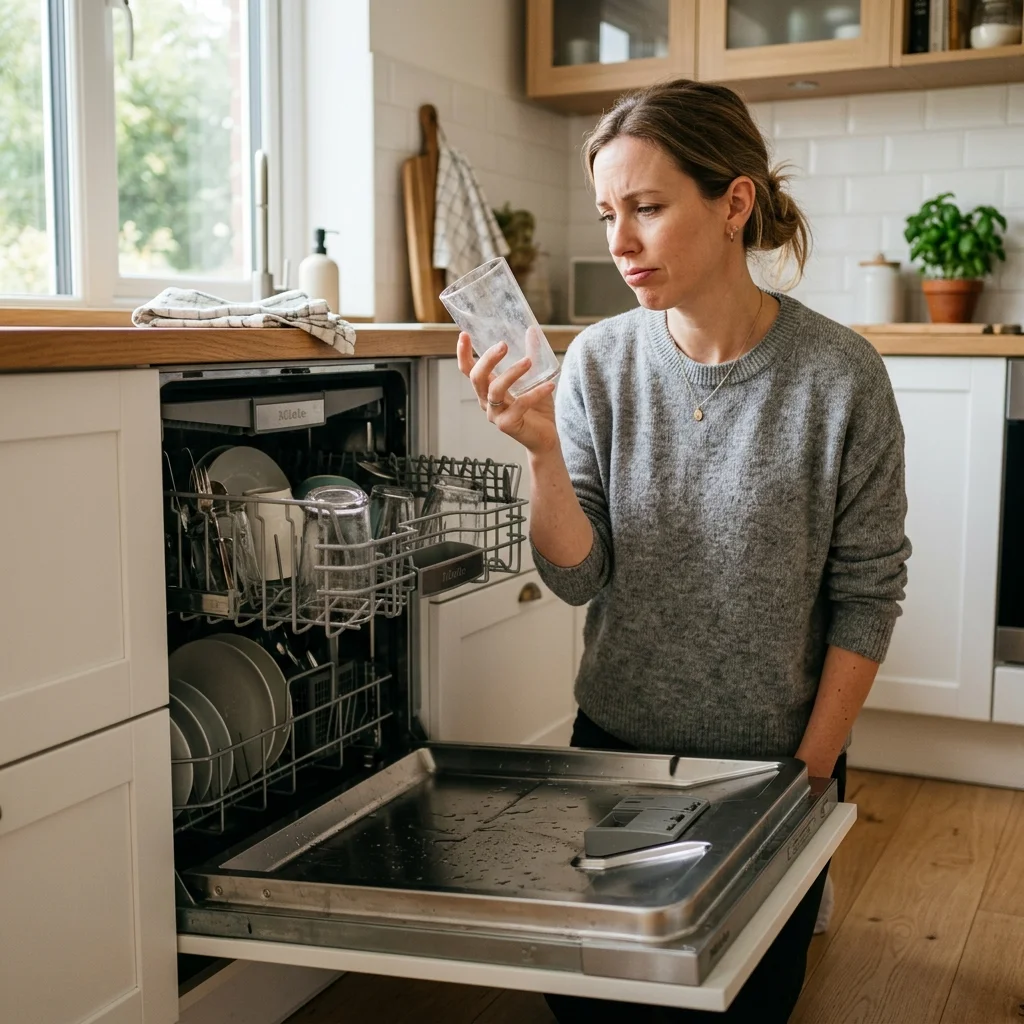
You run a full cycle, open the door, and the dishes still feel gritty or filmy. It ranks among the most common kitchen frustrations, and the good news is that most causes are simple to spot and fix. Before you rewash by hand or shop for a new unit, work through the reasons below. Each one explains why it happens, a quick self check you can try, and the point where the problem calls for professional dishwasher repair in Livonia MI.
Short on time? Here is the fast version.
- Most common causes: a clogged filter, blocked spray arms, cool water, the wrong detergent, and hard water scale.
- Safe self checks: clean the filter, clear the spray arm jets, run the hot tap first, add rinse aid, and run a vinegar cycle.
- Call a pro when: dishes stay dirty after every check, the machine will not fill or heat, or an error code keeps returning.
- Repair or replace: if the fix costs less than half the price of a new unit and the machine is under 8 years old, repair usually wins.
A dishwasher leaves dishes dirty most often because of a clogged filter, blocked spray arms, water that is not hot enough, the wrong detergent, or hard water buildup. Many fixes are simple, like cleaning the filter or adding rinse aid. Deeper faults in the inlet valve, heating element, or pump need a certified pro.
How a Dishwasher Actually Cleans
Understanding the basics helps you spot the fault fast. Water enters through the inlet valve, heats to roughly 120°F, and the pump pushes it through the spinning spray arms. Those arms fire water at your dishes while detergent breaks down grease. A filter traps the loosened food so it does not land back on clean plates. When any one of those steps fails, dishes come out dirty. The reasons below follow that same path.
Reason 1: A Clogged Filter
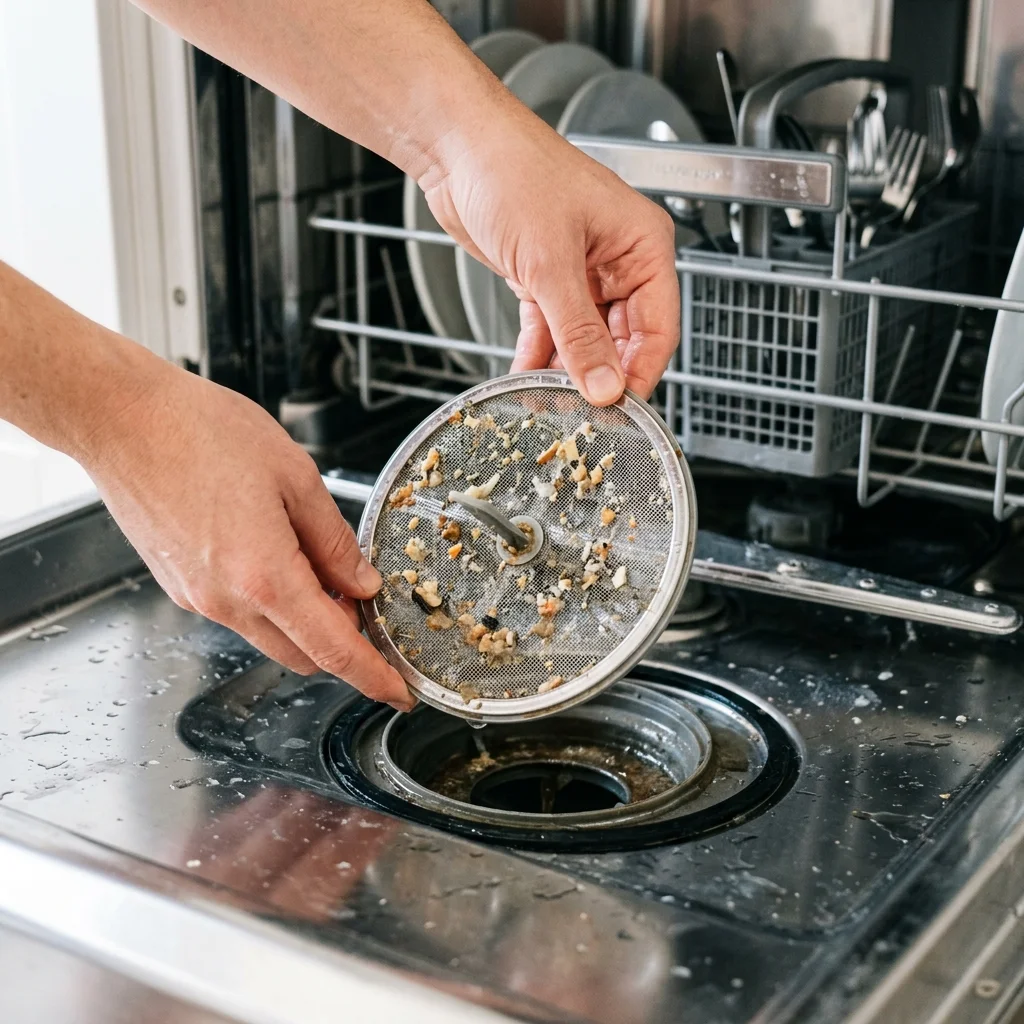
The filter catches food so it does not wash back onto your dishes. When it clogs, the machine recirculates dirty water and leaves grit and even odors behind.
Try this first: Pull out the lower rack, twist the filter to remove it, and rinse it under warm water with a soft brush. Clean it about once a month to keep loads fresh.
Call a pro when: The filter is clean but dishes stay dirty, which points to a deeper circulation problem.
Reason 2: Blocked Spray Arms
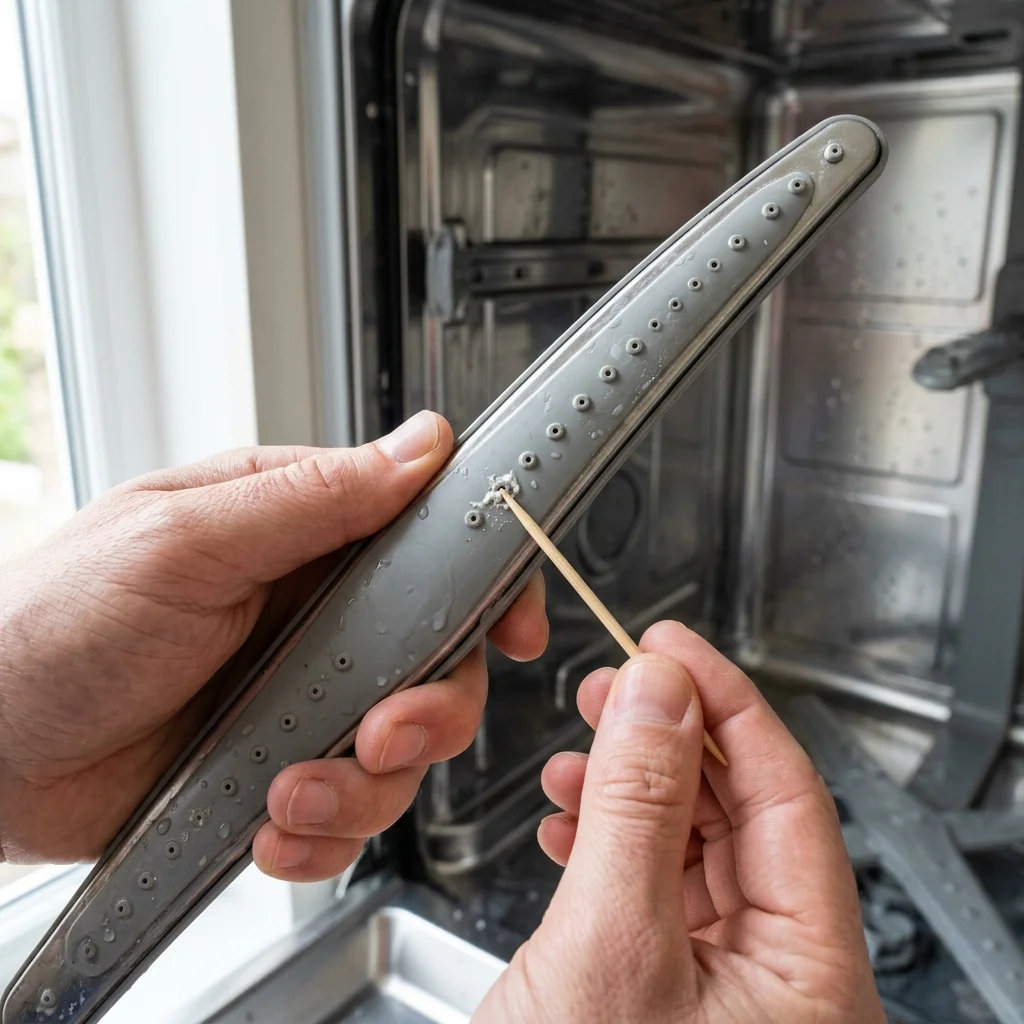
Those spinning spray arms shoot water through tiny jets to reach every dish. Food bits or mineral deposits clog the jets and drop the water pressure, so dishes on the top or bottom rack come out dirty.
Try this first: Remove the arms per your manual, hold each up to the light, and clear blocked holes with a toothpick or thin wire. Rinse and reinstall.
Call a pro when: An arm is cracked, warped, or will not spin freely even after cleaning.
Reason 3: Water Not Hot Enough
Dishwashers need water near 120°F to dissolve detergent and cut grease. Cooler water leaves a film on glasses and plates, and it stops certain detergents from activating.
Try this first: Run the kitchen hot tap for a few seconds before starting the cycle so hot water enters right away. Confirm your water heater is set correctly.
Call a pro when: The water still runs cool. A failing heating element or water inlet valve needs a technician.
Reason 4: Wrong Detergent or Poor Loading
Your detergent choice and the way you load both shape the result. Fixes here are quick and cost nothing.
- Use fresh automatic dishwasher detergent, never liquid dish soap, which creates suds that overflow the door.
- Face dishes inward toward the spray so water hits the soiled surfaces.
- Skip overloading, which blocks the arms and traps food.
- Put glasses on the top rack for a gentler, cleaner wash.
- Add rinse aid to fight spots and hard water film.
Reason 5: Hard Water Buildup
Hard water is common in many homes, and its minerals collect on the filter, arms, and inner walls. Over time that scale dulls dishes and clouds glasses.
Try this first: Pour about three cups of white vinegar into the bottom of the empty machine and run a hot cycle with no detergent. Repeat monthly if your water is hard.
Call a pro when: Heavy scale affects the inlet valve or the machine no longer fills properly.
Reason 6: A Faulty Water Inlet Valve
If the dishwasher does not get enough water, it cannot clean. The inlet valve controls that flow.
Try this first: Open the door mid cycle after a few minutes and check the water level. It should sit at least a couple of inches deep at the base. Low water points to a supply or valve issue.
Call a pro when: The supply line is open and clear but water still runs low. A worn inlet valve is a replacement part best left to a technician.
Reason 7: A Broken Soap Dispenser
Sometimes the detergent never releases at the right time, so it does no work at all.
Try this first: After a cycle, check whether the dispenser door opened and emptied. A stuck latch or a blocked door often causes leftover detergent.
Call a pro when: The dispenser stays shut or the latch is broken. The part usually needs professional replacement.
Do Not Pre Rinse Too Much
Here is a surprise: scrubbing dishes spotless before loading can backfire. Modern detergent needs some food to work on. With nothing to grip, it can leave a cloudy film on clean glasses instead. Scrape off large scraps, but leave the light stuff for the machine.
Common Dishwasher Error Codes
Many newer dishwashers flash a code when something fails. A code that returns after a reset signals a real fault. Here are common examples drawn from manufacturer guides.
| Code | Common meaning | First check |
| E1 / F1 | Water fill or leak issue | Supply valve, inlet hose |
| E4 | Overfill or leak sensor | Check base for water |
| E15 / F15 | Leak detected in base | Stop use, call a pro |
| E24 / E25 | Drain or pump blockage | Clean filter and drain hose |
| HE / H2O | Heating or water temperature fault | Heating element, inlet valve |
Try this first: Note the code, then run a reset by turning the machine off at the breaker for a few minutes. Clean the filter and check the supply line.
Call a pro when: The code returns or points to a leak or heating fault. Those need proper diagnostics.
When It Is Time to Call for Dishwasher Repair
Start with the simple checks: clean the filter, clear the spray arms, fix the detergent, and run a vinegar cycle. If dishes still come out dirty, the fault likely sits in a part you should not tackle alone, such as the water inlet valve, the heating element, the drain pump, or the circulation motor. A certified technician can diagnose the true cause and finish most dishwasher repair jobs quickly.
Repair or Replace? Use the 50 Percent Rule
Most dishwashers last about 8 to 10 years. A simple guide is the 50 percent rule.
| Situation | Best move |
| Under 6 years, repair below half of new price | Repair |
| 6 to 8 years, moderate repair | Judgment call, weigh reliability |
| Over 8 years, major part failing | Replace |
| Repair over half the price of new | Replace |
Age and repair history matter as much as the quote. A certified technician can give you an honest read before you spend.
What a DIY Fix Can and Cannot Cover
Some upkeep is safe for any homeowner. Deeper work is not, for both safety and warranty reasons.
Safe to try yourself: cleaning the filter, clearing spray arm jets, running a vinegar cycle, checking the water level, and fixing loading habits.
Leave to a pro: inlet valve, heating element, drain pump, control board, and soap dispenser appliance repairs. Water and electrical parts carry real risk.
A Quick Word on Warranties
Check your coverage before any deeper fix. Many manufacturer warranties require a licensed pro, so a DIY attempt on an internal part can void protection you still hold. Cleaning the filter and arms is always safe. Opening up the pump or valve is not.
Preventive Maintenance Schedule
Routine care prevents most dirty dish problems. Follow this simple schedule.
| Frequency | Task |
| Every load | Scrape large food scraps, load for open spray paths |
| Weekly | Wipe the door seal and edges |
| Monthly | Clean the filter, run a vinegar cycle, check spray arm jets |
| Seasonally | Inspect the inlet and drain hoses, top up rinse aid |
| Yearly | Deep clean for hard water scale, check the door gasket |
Frequently Asked Questions
Why is my dishwasher not cleaning dishes?
Common causes are a clogged filter, blocked spray arms, water below 120°F, the wrong detergent, or hard water buildup. Clean the filter and arms first, then check water temperature and detergent.
How do I clean a clogged dishwasher filter?
Pull the lower rack, twist out the filter, and rinse it under warm water with a soft brush to lift food and mineral buildup. Do this about once a month.
Why does my dishwasher leave a white film on glasses?
Hard water minerals and cool water usually cause white film. Rinse aid, hotter water, and a monthly vinegar cycle help. Film that will not clear may signal an inlet valve issue.
Can I use regular dish soap in my dishwasher?
No. Dish soap creates heavy suds that can overflow the door. Use only automatic dishwasher detergent made for the machine.
Why are my dishes still wet at the end of the cycle?
Poor drying often traces to low rinse aid, a cool final rinse, or a heating element fault. Top up rinse aid and confirm the heat dry setting is on. Persistent wet dishes may need a pro.
What does a dishwasher E15 code mean?
E15 usually signals a leak detected in the base of the machine. Stop using it, since running it can worsen the leak, and call a technician to find the source.
Should I repair or replace a dishwasher that won’t clean?
Use the 50 percent rule. If the repair costs less than half the price of a new unit, repair usually wins. Age and repair history guide the call, since most dishwashers last about 8 to 10 years.
Final Thoughts
Dirty dishes after a full cycle almost always trace back to a filter, spray arm, water, or detergent issue you can check in minutes. Work through the list, and you will fix most cases yourself. When the problem runs deeper, prompt dishwasher repair from a certified technician in Livonia MI gets your machine sparkling again.