

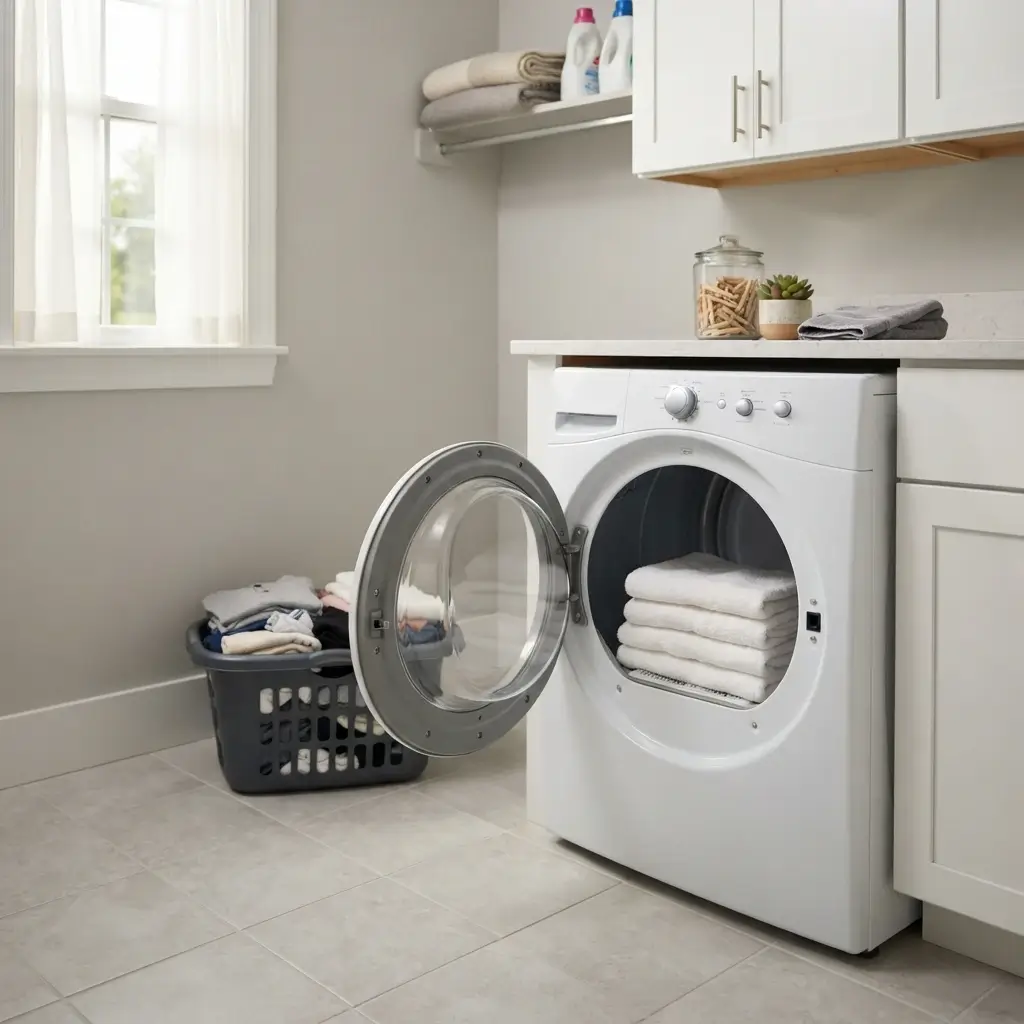
A dryer taking multiple cycles to dry clothes almost always has an airflow problem, not a broken machine. Hot air enters the drum, picks up moisture from your laundry, then leaves through the vent. Block that exit path and the moisture stays put. Your clothes come out warm and damp, so you press start again.
Most homeowners assume the dryer is dying. In most cases the appliance works fine. Something between the drum and the outside wall is choking the air.
A dryer taking multiple cycles to dry clothes usually has restricted airflow rather than a failed motor. A clogged dryer vent, a coated lint screen, or a crushed vent hose traps moisture inside the drum, so laundry stays damp however long the machine runs. Heating and sensor faults explain the rest.
How Long Should a Dryer Cycle Actually Take?
A healthy dryer finishes a standard load in one cycle of 35 to 50 minutes. Towels and bedding can push toward the upper end. Anything past that means one of three things has slipped: heat, airflow, or tumbling.
Use that number as your baseline. If your machine used to finish in 45 minutes and now needs 90, the change itself is the clue. Slow decline over months points to lint buildup. A sudden jump points to a part that just failed.
Start Here: Match Your Symptom to the Cause
Your dryer gives you a specific signal. Read it before you open anything.
| What you notice | Most likely cause | Where to look first |
| Clothes are hot but still damp | Restricted airflow | Vent, lint screen, hose |
| The drum spins, but air feels cool | Heating element or thermal fuse | Heat system: call a technician |
| The cycle ends early with wet laundry | Moisture sensor reading wrong | Sensor bars inside the drum |
| Dry times got worse month by month | Lint buildup in the vent run | Full vent cleaning |
| Rattling or thumping during a cycle | Blower wheel obstruction | Blower housing, call a technician |
| Burning or musty smell | Overheating lint in the vent | Stop the dryer, call a technician |
Match your symptom, then jump to that section.
Why Your Dryer Is Taking Multiple Cycles to Dry: The Airflow Problem
Airflow explains the large majority of these calls. Your dryer relies on a steady stream of air to carry water vapor out of your home. Cut that stream and heat alone accomplishes very little.
Clogged Dryer Vent Symptoms Every Homeowner Should Know
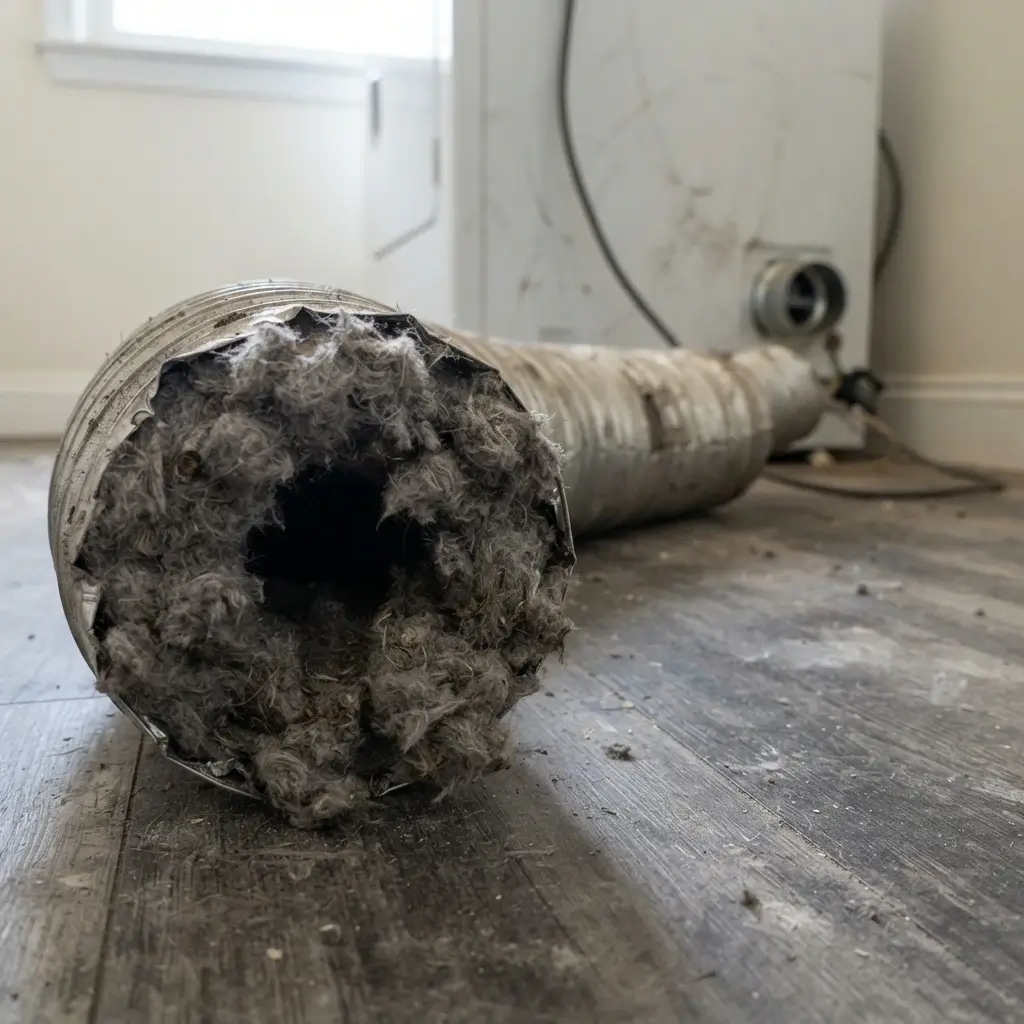
Lint escapes the trap on every single load. Over the years it settles along the duct walls, gathers at elbows, and packs around the exterior flap. Airflow drops slowly, so you adapt without noticing.
Watch for these clogged dryer vent symptoms:
- Clothes feel unusually hot to the touch
- The dryer cabinet itself feels hot on top or on the sides
- The laundry room turns warm and humid during a cycle
- Lint collects around the exterior vent opening
- The vent flap outside barely lifts while the machine runs
Try the hand test. Run the dryer, walk outside, and hold your palm near the vent. You should feel a strong, steady push of warm air. Weak airflow confirms a restriction.
The Lint Filter Trap Nobody Talks About

You clean the lint screen every load. Good. Yet a clean-looking screen can still choke your dryer. Dryer sheets and liquid fabric softener leave a clear waxy film on the mesh, and that film blocks air just as well as visible lint.
Here is the water test. Pull the screen out and run tap water over it. Water should pass straight through. If it pools on the surface, scrub the screen with warm water, dish soap, and a soft brush. Let it dry completely before you slide it back.
While the screen is out, vacuum the housing slot below it with a crevice tool. Unplug the dryer first.
Dryer Vent Hose Kinked or Crushed Behind the Machine
The flexible duct behind your dryer is a weak point. Push the machine back too far and the hose folds, flattens, or pops loose. Even a partial kink drops airflow sharply.
Unplug the unit, pull it forward, and inspect the duct. It should curve smoothly with no sharp bends or flat spots. Foil and vinyl accordion hose traps lint in its ridges and collapses easily. Rigid or semi rigid aluminum duct holds its shape, sheds lint better, and meets current building codes.
Blocked Exterior Vent Flap
The outside cap deserves its own check. Birds nest behind it. Leaves, snow, and debris jam the flap shut. A stuck flap seals your vent completely, and no amount of interior cleaning will fix that.
Habits That Leave Clothes Still Damp After a Dryer Cycle
Sometimes the machine is healthy and the routine needs a small edit.
Overloading the Dryer: Effects on Drying Time
Cramming one huge load feels efficient. It backfires. Packed clothes cannot tumble, hot air skims the outside of the pile, and the items in the middle stay soaked.
Fill the drum about three quarters full. Split towels and bedding into two smaller loads. Many homeowners solve the whole issue right here.
Wrong Heat Setting for the Load
Low heat and delicate cycles suit lightweight fabrics. Run a pile of heavy towels on delicate and the machine simply will not generate enough heat in one pass. Match the setting to the fabric weight. Heavy cottons need high heat.
Sensor Dry vs Timed Dry: A Simple Test
This one diagnoses your dryer for free. Run a normal load on Timed Dry instead of the automatic sensor cycle. If Timed Dry finishes the job and Sensor Dry does not, your moisture sensing system needs attention rather than your vent.
Your Washer May Be the Real Culprit
A weak spin cycle sends soaking laundry into the drum. The dryer then has far more water to remove than it was built to handle in one cycle. Reach into the washer at the end of a spin. Clothes should feel damp, not dripping. Dripping laundry points at the washer, and our washer and dryer repair team fixes spin and heating faults on both machines.
When It Is the Machine: Mechanical Causes
You cleaned the vent, fixed your habits, and the dryer still needs two runs. Now the appliance itself is worth testing.
Dryer Runs but No Heat: Heating Element Not Working
An electric heating element burns out over time. The drum keeps turning, the fan keeps blowing, and the air stays cool. A partially failed element is trickier because it produces some warmth, just not enough, which is exactly how a dryer ends up needing two or three cycles.
Testing means a multimeter and safe disassembly. Leave this one to a technician.
Dryer Thermostat Problems and a Blown Thermal Fuse
The cycling thermostat switches heat on and off to hold a target temperature. The high limit thermostat and thermal fuse act as safety devices and cut power if the machine overheats. When a thermostat reads temperature wrong, the dryer never reaches the heat it needs. A blown thermal fuse can stop heat entirely while the drum keeps spinning.
Restricted airflow is often what blows these parts in the first place, which is why a clean vent protects them.
Dryer Moisture Sensor Not Working
Modern dryers read moisture through two metal sensor bars inside the drum, usually near the lint screen opening. Fabric softener residue coats those bars over time. The sensor then reads clothes as dry too early and ends the cycle with damp laundry inside.
Wipe the bars gently with rubbing alcohol on a cotton ball. Repeat once or twice a year. If the cycle still cuts short, the sensor or its wiring harness needs a proper test.
Broken Blower Wheel
The blower wheel pushes air through the drum and out the duct. A stray sock or a coin can slip past the screen and strike the wheel. You will hear thumping or scraping, and the airflow at the outside vent will drop to almost nothing.
Gas vs Electric Dryers: What Fails Differently
The airflow rules are identical. The heat source is not.
| Electric dryer | Gas dryer | |
| Heat source | Heating element | Burner with igniter |
| Common heat fault | Burned out element | Weak igniter or gas valve solenoid |
| Power need | 240 volt circuit | 120 volt plus gas line |
| Two circuit issue | One tripped breaker means spin without heat | Igniter fails, drum still turns |
An electric dryer plugged into a standard 120 volt outlet will run, yet drying times stretch out dramatically. Gas repairs belong to a licensed technician every time. Our certified technicians handle both gas and electric dryers.
Why Livonia Homes Face This More in Winter
Michigan winters raise the odds in three ways. Laundry volume climbs with heavy sweaters, coats, and blankets. Many Livonia homes place the dryer in a cold basement or an unheated garage, and cold surrounding air makes moisture harder to carry away, so cycles stretch. Older housing stock often runs longer vent lines through walls and ceilings with several elbows, and every elbow gathers lint faster.
If your dryer coasted through summer and started struggling in December, this is usually why. We see the same pattern across Livonia and the surrounding service areas each winter.
The Real Cost of Running Two Cycles Every Load
Doubling Your Energy Bill
Two cycles per load means roughly double the electricity or gas for the same laundry. Across a typical week of five to seven loads, that adds real money to your utility bill every month of the year.
Wearing Out Clothes and Shortening Dryer Life
Extra heat exposure breaks down elastic, fades color, and thins fabric. Your towels lose their fluff sooner. Meanwhile, the motor, belt, bearings, and heating element all log double the run hours, so the appliance ages twice as fast and reaches its repair point years early.
The Fire Risk You Can Not See
This part matters most. Lint is highly flammable, and a restricted vent keeps that lint sitting in rising heat for twice as long. The U.S. Fire Administration identifies failure to clean the dryer as the leading factor in clothes dryer fires. Long dry times are your early warning.
How Often Should You Clean Your Dryer Vent?
Once a year is the standard for most households. Large families, long vent runs, and homes that run several loads a day benefit from every six months.
Keep this simple routine between cleanings:
- Clean the lint screen before every load
- Wash the screen with warm soapy water each month
- Fill the drum three quarters full at most
- Keep the space behind the dryer clear so the hose stays open
- Check the exterior vent flap once a month
- Wipe the moisture sensor bars twice a year
When to Stop Troubleshooting and Call a Pro
Book a technician when any of these show up:
- Drying times stay long after you clean the screen, hose, and vent
- The drum tumbles yet the air stays cool
- The cycle ends early with wet clothes even on Timed Dry
- You hear thumping or scraping from inside the cabinet
- The dryer feels very hot or shuts off partway through
- You smell burning near the machine
That last one calls for immediate action. Stop the dryer and get it inspected before you run another load.
Our team handles dryer and washer repair along with a full range of appliance repair services for homeowners across Livonia. We test airflow, heat, and sensor systems, then explain exactly what your machine needs. Contact us to book a same day or next-day visit.
Frequently Asked Questions
Why is my dryer not drying but still heating?
Restricted airflow is the likely answer. The machine produces heat, yet the moist air cannot leave the drum, so water vapor circulates instead of exiting. Check the lint screen, the vent hose, and the exterior flap. Clothes that feel hot and damp point straight at airflow.
Can a clean-looking lint screen still cause long dry times?
Yes. Dryer sheets and liquid softener leave a clear film on the mesh that blocks air while looking spotless. Run water over the screen. Water that pools instead of passing through confirms the film. Wash it with warm water, dish soap, and a soft brush.
How often should you clean your dryer vent?
Once a year suits most households. Choose every six months if you run heavy laundry volumes, have a long vent run, or share the home with several people. Regular cleaning keeps drying times short and lowers fire risk at the same time.
Can I clean my dryer vent myself?
You can handle a surface clean with a brush kit and a vacuum, working from the back of the dryer and from the exterior cap. A professional cleaning reaches the full duct run inside walls and ceilings, where the heaviest buildup usually sits.
My dryer is brand new. Why does it still take two cycles?
A new appliance connects to an old vent system. Leftover lint from the previous machine, a crushed hose, or a poor installation angle will slow a brand new dryer immediately. Inspect the vent path before you assume the appliance has a defect.
Does laundry room temperature affect how well my dryer works?
It does. Cold basements and unheated garages give the dryer cooler intake air, so cycles run longer through winter. A humid room adds a second hurdle, since the surrounding air already holds moisture. A warmer, well-ventilated space produces the best results