
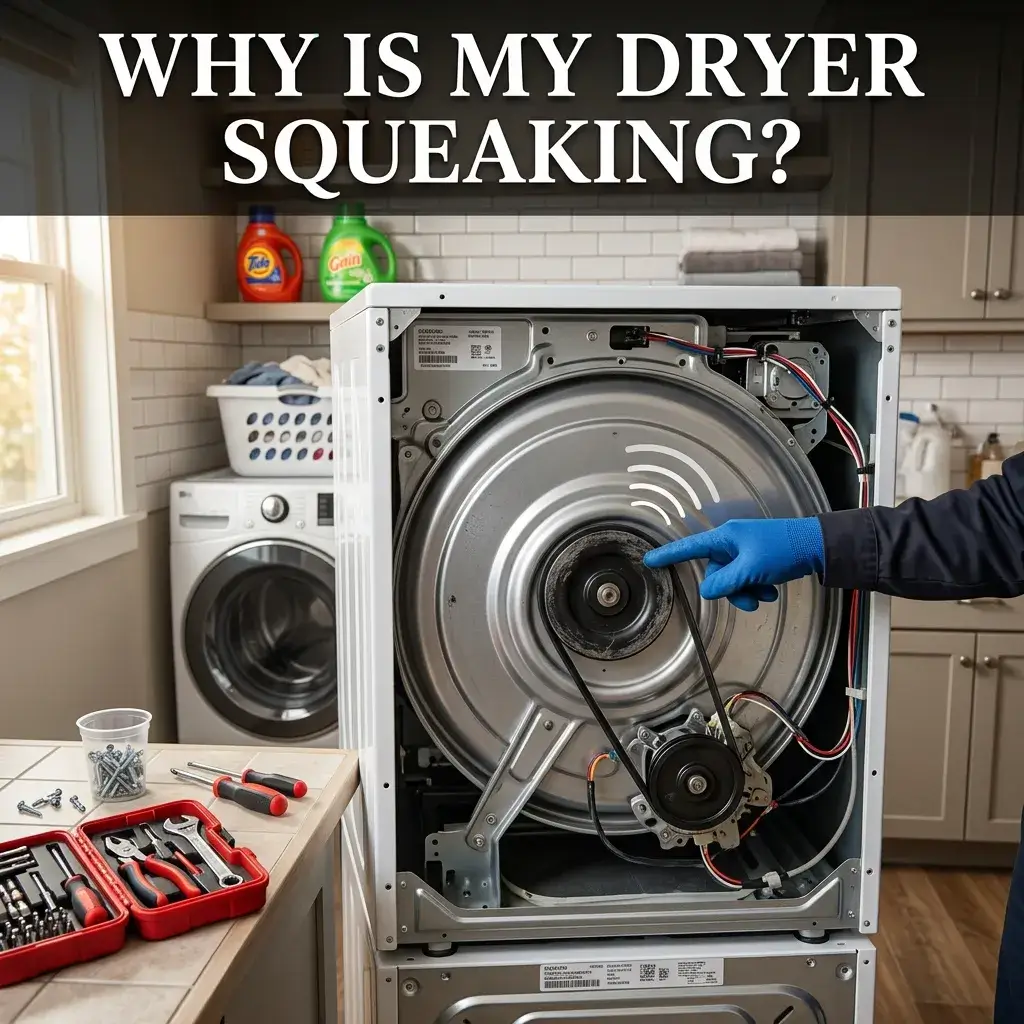
That sharp squeak from your dryer is easy to notice and hard to ignore. In most cases, a dryer squeaking points to a worn part that has lost its smooth movement, and the good news is that many causes of a dryer squeaking are simple to track down. This guide walks you through why your dryer is squeaking, how to find the source, which fixes you can handle yourself, and when to call a pro.
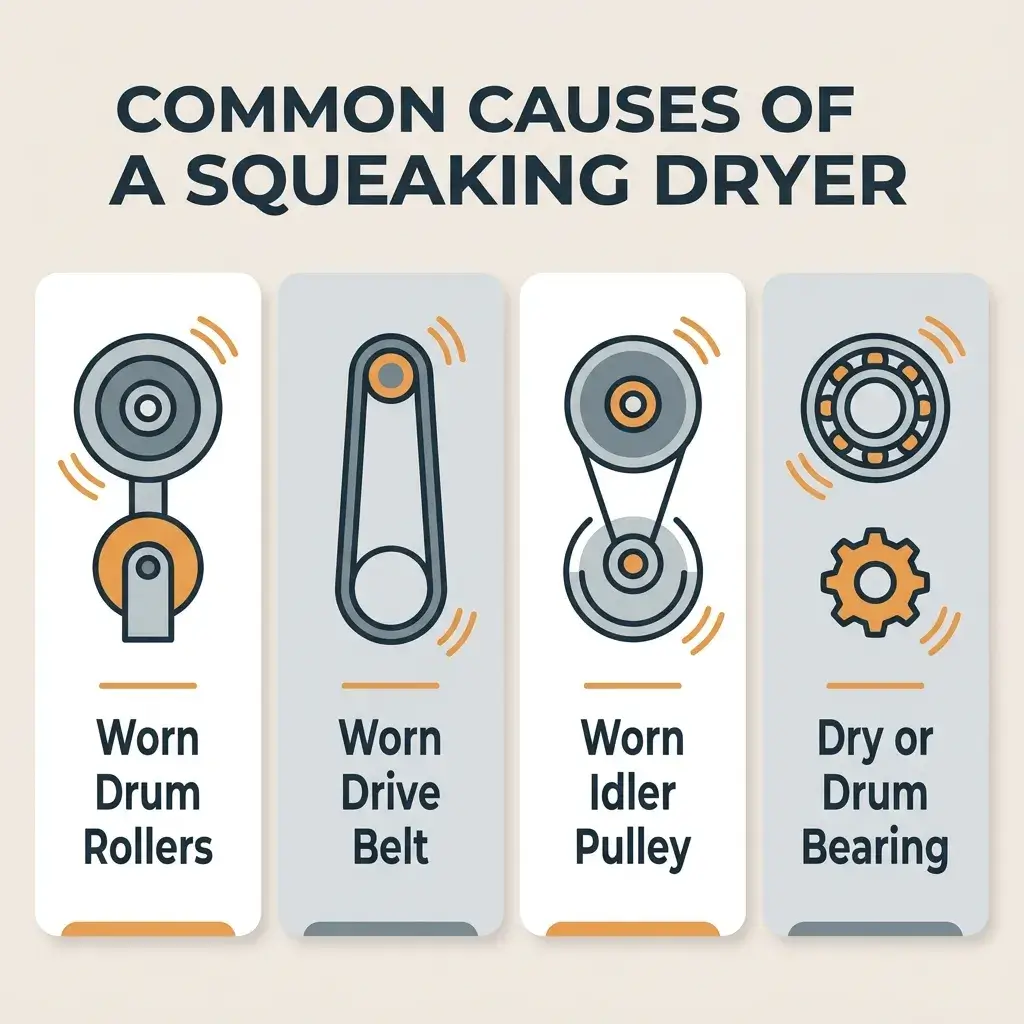
A dryer squeaking usually means a moving part has worn out or dried up. Common culprits behind a squeaking dryer include the drive belt, idler pulley, drum rollers, roller shafts, drum bearings, or drum glides. Sometimes the fix is simpler, such as a dryer sitting unlevel on the floor or a load that is too large.
Why Is My Dryer Squeaking? Quick Diagnosis
Before you open anything up, listen closely. Where the sound comes from and when it happens both point toward the likely part. These two quick checks narrow the search fast, and they save you from pulling the whole machine apart to chase a dryer squeaking noise.
Pinpoint the Noise by Location
A squeak from the bottom often means unlevel or loose legs, or a tired motor. Sound from the front, near the door, tends to come from the drum glides, idler pulley, or front rollers. Noise from the back usually traces to the drive belt, drum bearings, or roller shafts.
Pinpoint the Noise by Timing
Timing tells you just as much. A squeak right at startup points to the idler pulley bearing or drive belt. Squeaking that lasts until the dryer warms up suggests the idler pulley or a stiff bearing. A squeak once per drum rotation points to the drum rollers or roller shafts, while noise that is loudest when the drum spins empty often means the belt, rollers, or bearings are straining under load.
Common Causes of a Squeaking Dryer
Now that you have a rough idea, here are the parts behind most squeaks and the sounds each one tends to make. Working through them in order helps you land on the true cause of your squeaking dryer.
Unlevel or Loose Dryer Legs
A dryer that rocks on uneven legs can squeak or rattle against the floor. This is the easiest cause to rule out first. Place a level on top of the unit, front to back and side to side, then adjust the feet until it reads even. Loose legs can also vibrate, so tighten them if the squeak lingers.
Worn Drive Belt
The drive belt wraps around the drum and helps it spin. As it frays or cracks, it can produce a sharp, rubber against metal sound, often right when the drum starts to turn. A worn belt is a frequent reason for a dryer squeaking, and it should be replaced before it snaps and stops the drum entirely.
Faulty Idler Pulley
The idler pulley keeps tension on the drive belt so it does not slip. When its small bearing wears out, you often hear a squeak at startup that eases as the dryer warms up. A pulley that no longer spins smoothly needs to be replaced to quiet the squeaking dryer.
Worn Drum Rollers and Roller Shafts
Drum rollers are small wheels that support the drum as it turns, and they sit on roller shafts at the back of the cabinet. Worn rollers or scratched shafts create a rhythmic squeak that repeats with each rotation and grows louder over time. Rollers usually wear together, so replacing them as a set is wise.
Worn Drum Bearings
Drum bearings support the rear of the drum. When they lose lubrication or wear down, they squeak as the drum spins. Reaching these parts calls for opening the cabinet, so many owners prefer help from a technician here.
Worn Drum Glides
Drum glides form a smooth pad between the front of the drum and the cabinet. As they wear thin, you may hear squeaking or grinding, and sometimes clothes catch or pick up brown marks. Glides also wear as a pair and should be swapped together.
Failing Motor and Motor Bearings
The motor drives the whole system. A failing motor or its bearings can turn a light squeak into a loud squeal or grinding noise. Because motor work involves wiring and clamps, this repair belongs with a professional.
Loose Baffles or Lint Buildup
Baffles, also called lifters, are the ridges inside the drum that tumble your clothes. When one loosens, it can squeak as the drum spins. Lint packed around moving parts adds friction too, which is one more reason regular cleaning matters for a quiet dryer.
How to Find and Fix a Squeaky Dryer Yourself
Some squeaks are well within reach of a confident do it yourselfer. A level, a wrench, and a screwdriver cover most of the basics. Work through these steps in order to trace the squeaking dryer to its source.
First, unplug the dryer for safety. On a gas dryer, shut off the gas supply as well before you touch anything. Next, set a level on top and adjust the feet so the unit sits flat. Then run the dryer empty for a moment and listen, since an empty drum makes the source easier to hear. After that, open the cabinet and spin the drum rollers by hand, because a roller that sticks or squeaks should be replaced. Finally, inspect the belt for fraying and check that the idler pulley turns freely.
If the belt, rollers, or pulley look worn, replacement parts are easy to find and match to your model number. Always check your owner’s manual first, since layouts differ between machines and a wrong part can make the dryer squeaking worse.
Can I Keep Using a Squeaking Dryer? Is It Safe?
A squeak on its own is not an immediate emergency, and you can usually finish the load you are drying. Still, the noise is a warning that a part is wearing out, so it deserves prompt attention. Ignoring a dryer squeaking can let a small problem grow into a bigger, costlier repair.
There is a safety angle worth knowing. Worn parts add friction, and friction plus trapped lint can raise heat inside the dryer. Keeping the lint screen and vent clear lowers that risk. The U.S. Fire Administration offers helpful guidance on clothes dryer fire safety and the role lint plays. Address the squeak soon, keep things clean, and you stay on the safe side.
Should You Repair or Replace a Squeaking Dryer?
The right call often comes down to which part failed and how old the dryer is. Wear parts like the belt, rollers, and idler pulley are relatively inexpensive and simple to install, which makes repair the clear winner. A failing motor costs more and takes more labor, so the math shifts toward a new unit.
Think about age too. If your dryer is well past a decade old and needs a major part like a motor, putting that money toward a new, efficient unit may serve you better. For a newer machine, a quick part swap keeps it running quietly for years, and it usually ends the squeaking dryer for good.
How to Prevent Future Dryer Squeaks
A little upkeep goes a long way toward a quiet dryer and helps you avoid a return of that squeaking dryer noise.
- Clean the lint screen before every load: so air moves freely and parts stay cool.
- Vacuum the vent and drum area monthly: to keep lint from building up around moving parts.
- Avoid overloading: since a heavy drum strains the belt, rollers, and bearings.
- Keep the dryer level: because an even stance reduces vibration and wear.
- Check the belt, rollers, and pulley once a year: for early signs of wear.
What Not to Do With a Squeaky Dryer
A few missteps can turn a minor squeak into a real problem, so keep these in mind when your dryer is squeaking.
- Skip the spray lubricants like WD40: They are combustible, and dryers run hot, so they can create a fire risk. Use only manufacturer approved lubricants.
- Do not ignore the sound: A squeak that turns into a squeal or grind signals a part close to failure.
- Avoid overloading: to reach a load faster, since extra weight speeds up wear.
- Leave motor and bearing work to a pro: unless you have real repair experience.
When to Call a Professional
Some repairs are simply safer and easier in trained hands. Motor replacement, drum bearing service, and any internal work on a gas dryer fall into that group. A licensed technician can confirm the exact cause of the squeaking dryer, use the right parts, and get your dryer running quietly again. If the noise has you unsure, a quick service visit saves guesswork and protects your appliance.
Frequently Asked Questions
Why does my dryer squeak until it warms up?
This pattern usually points to the idler pulley or a stiff bearing. As the parts warm and expand slightly, the squeak often fades. A pulley that keeps squeaking should be checked and likely replaced.
How do you lubricate a squeaky dryer?
Use only a manufacturer approved lubricant on the parts your manual specifies, and never a household spray. Because reaching bearings and rollers means opening the cabinet, many owners have a technician handle the greasing safely.
Should you grease dryer drum rollers?
Drum rollers do need proper lubrication to spin quietly, yet accessing them calls for removing the drum. If a roller is worn rather than just dry, replacement works better than grease.
Can you use WD40 on a dryer?
No. That spray lubricant is combustible, and a dryer’s high heat makes it a fire hazard. Stick with the lubricants your manufacturer recommends.
How do I know if my dryer drum rollers are bad?
Listen for a squeak that repeats with each drum rotation and grows louder over time. You can also unplug the dryer, open the cabinet, and spin each roller by hand, since one that sticks or squeaks is worn.
Why is my dryer squeaking when it first starts?
A squeak at the very start often comes from the drive belt or the idler pulley bearing. Both take on tension the moment the drum begins to turn, which is when a worn part speaks up.