
A garbage disposal works by spinning food waste against a stationary grind ring until the waste breaks into tiny particles that flush down the drain with water. Mounted under your kitchen sink, this handy appliance turns leftover scraps into a fine slurry in seconds. Many people picture sharp blades chopping the food, yet the truth surprises most homeowners. Once you learn how a garbage disposal works, the design feels simple and smart. This guide walks you through every part, the full grinding process, and the real questions people ask most.
A garbage disposal works by using impellers on a fast-spinning plate to fling food waste against a stationary grind ring. Centrifugal force pushes the scraps outward, and the ring shreds them into fine particles. Running cold water then flushes those particles through the drain and into your plumbing.
The Parts of a Garbage Disposal
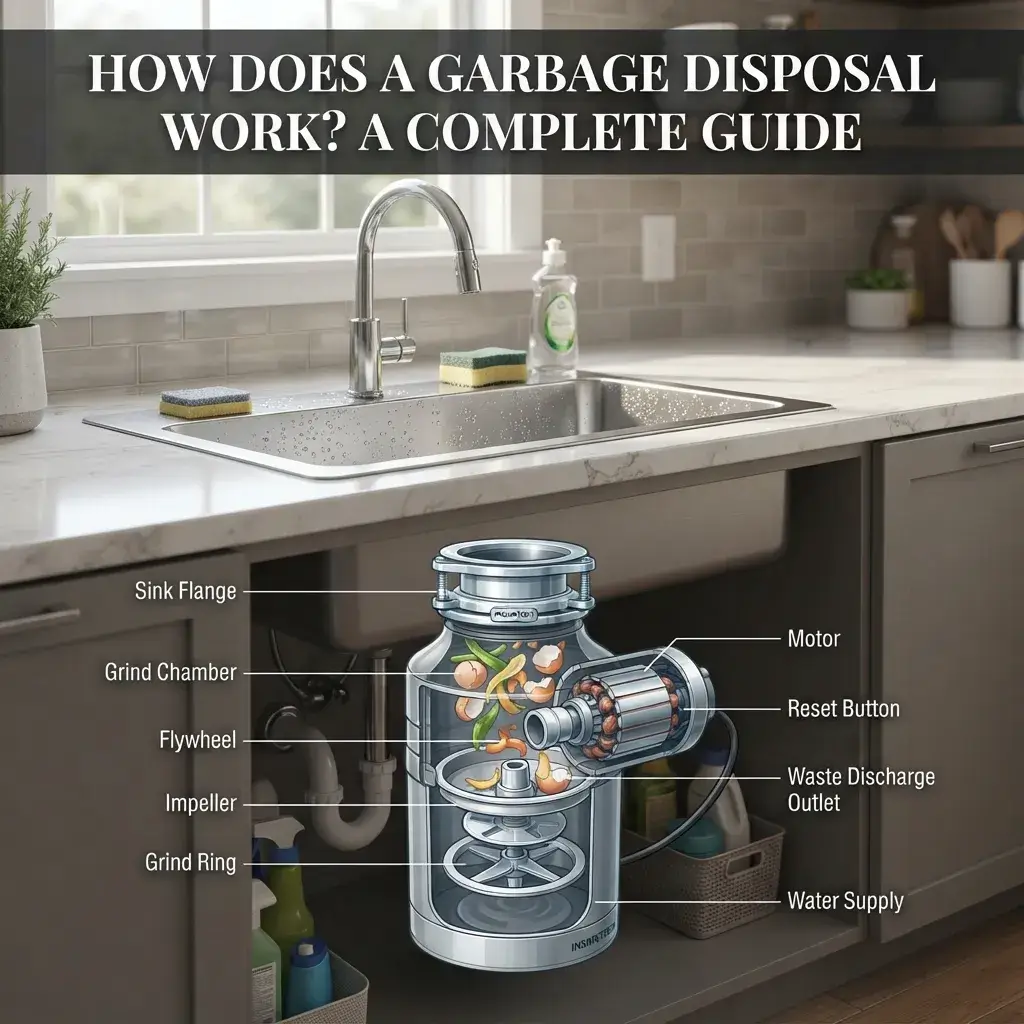
A garbage disposal holds several parts that work together as one system. Each piece has a clear job, from catching scraps to flushing them away. Knowing these parts makes the whole process easy to picture, and it helps you spot trouble fast when something feels off.
Motor and Motor Shaft
The motor powers everything. Most home units run between one-third and one horsepower. When you flip the switch, the motor turns a shaft that drives the spinning parts below. Stronger motors grind tougher scraps and clog far less often, which is why bigger kitchens tend to pick higher power ratings.
Flywheel and Shredder Plate
Sitting on top of the motor shaft is the flywheel, also called the shredder plate. This flat metal disc spins at high speed, up to 2000 revolutions per minute. Food lands on this plate first. Rapid spinning creates the force that starts the grinding.
Impellers (Lugs)
Two small metal pieces called impellers, or lugs, attach to the flywheel. Folks often call them blades, though they are blunt, not sharp. As the plate spins, these lugs sling food outward toward the chamber wall.
Grind Ring or Shredder Ring
The grind ring circles the inside wall of the chamber and stays still. Its surface looks a bit like a cheese grater. When spinning food hits this ring, the ring shreds it into fine bits small enough to pass through tiny openings.
Baffle, Chamber, and Waste Line Connector
The baffle is the rubber splash guard at the top. It keeps water and scraps inside while you feed food in. Below sits the grinding chamber, where the action happens. Ground waste exits through the waste line connector into your drain pipe, the same line that also carries wastewater from your dishwasher, which is why a disposal clog often shows up as a dishwasher drainage problem too.
How Does a Garbage Disposal Work, Step by Step
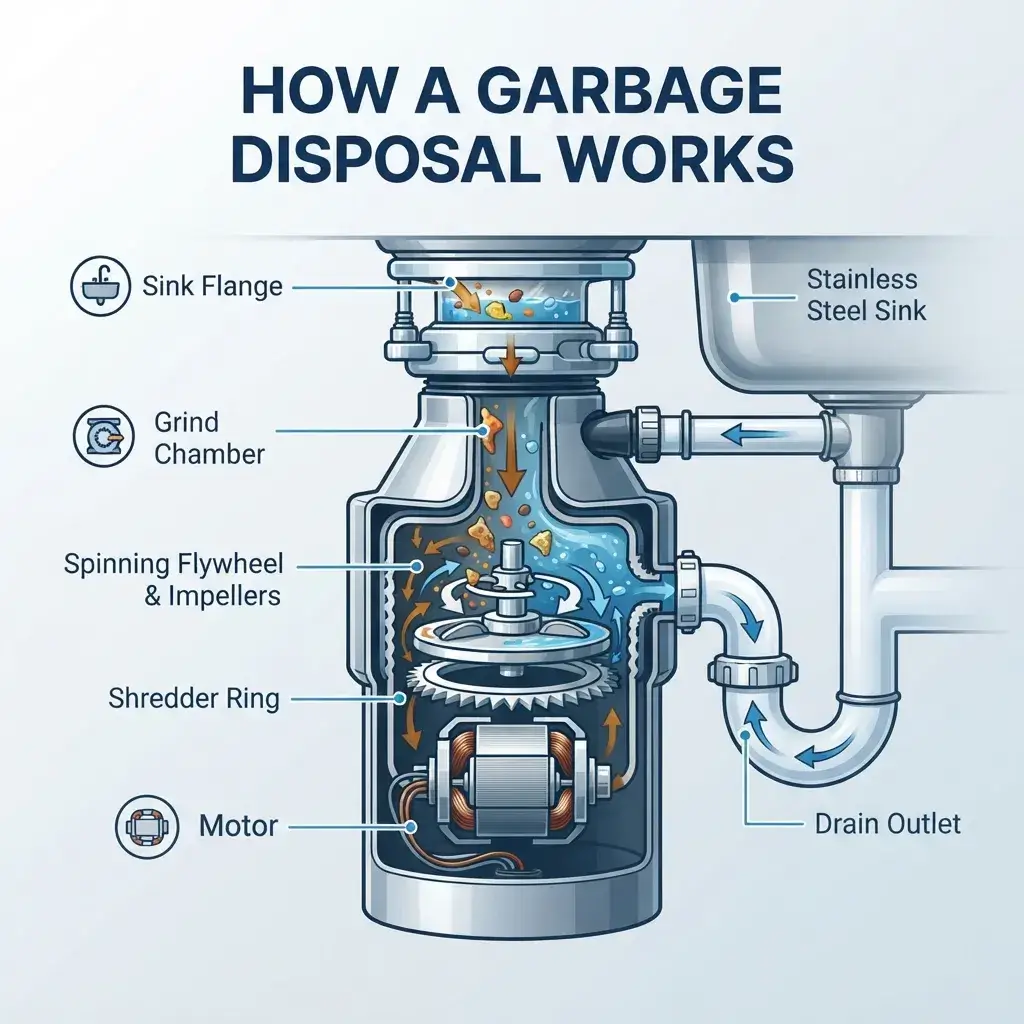
Now that you know the parts, here is how a garbage disposal works from start to finish. The sequence takes only a few seconds.
First, turn on a steady flow of cold water. Next, flip the switch to start the motor. The motor spins the flywheel, and centrifugal force flings food waste against the grind ring. That ring shreds the scraps into fine particles. Water then carries those particles through the waste line connector and into your plumbing. Finally, let the water run a few more seconds to clear the pipe.
Here is the key myth to drop: a garbage disposal is not a blender. No sharp blades chop your food. Instead, blunt impellers and a steel grind ring pulverize scraps through speed and pressure. That design lasts longer and jams less than spinning knives ever could.
Why Cold Water Matters
Cold water plays a big role every time you grind. It keeps fats and grease solid so they break apart instead of coating your pipes. Running water also cools the motor and stops it from overheating during longer grinding.
The steady flow does one more thing. It flushes ground particles all the way through the drain line, which lowers the chance of a clog. Warm water softens grease and lets it stick, so cold stays the smarter choice every time you run the unit.
Continuous Feed vs. Batch Feed Disposals
Two main types of garbage disposal exist, and they start in different ways. Knowing the difference helps you use yours safely.
A continuous feed model is the most common. You flip a wall switch or air switch, and the unit runs while you drop scraps in. This type grinds a lot of waste quickly. Batch feed models run only after you fit a special stopper lid into the opening. Since the lid must sit in place, this type adds a layer of safety and keeps hands and objects out of the chamber.
What the Horsepower and RPM Numbers Mean
Numbers like horsepower and RPM appear on every spec sheet, yet few people know what they mean for daily use. Both affect how well your unit grinds.
Horsepower measures grinding strength. A one third horsepower unit suits light use in a small home. Bigger motors rated at three quarter or one horsepower power through harder scraps, run smoother, and jam less. RPM measures spinning speed, often near 2000 revolutions per minute. Faster spinning creates more force, which grinds food finer and flushes it away with ease.
Where Does the Food Waste Go?
After grinding, the fine slurry leaves your home through the drain pipe. From there it travels to one of two places, depending on your setup.
Homes on a city line send the waste to a wastewater treatment plant. Many plants use anaerobic digestion, a process that breaks down food waste and recovers biogas and nutrients for fertilizer. Households with a septic tank send the slurry there, where natural bacteria break it down over time. Either way, the ground scraps stay out of the trash can and cut down on kitchen odor.
Are Garbage Disposals Septic Safe?
Yes, a garbage disposal can work with a septic system when you use it with care. Food scraps are mostly water, so they add little solid bulk to the tank. A controlled study of food waste degradation in a simulated septic tank by Lin, Wang, van Lierop, Zamalloa, Furlong, Keleman, and Hu (2019), published in Waste Management and Research, found that adding food waste raised suspended solids and chemical oxygen demand without causing acidification of the tank (PubMed record). Households on septic should still grind lightly and pump the tank on schedule to keep the system healthy.
A Brief History of the Garbage Disposal
The garbage disposal has a longer past than most people expect. John W. Hammes, an architect from Racine, Wisconsin, built the first unit in his home in 1927. He spent years refining the design, earned a patent in 1935, and brought it to the public in 1940 under the InSinkErator name.
General Electric entered the market too, with a unit called the Disposall in 1935. Early on, many cities banned food waste in their sewers, so makers pushed hard to lift those rules. Today the appliance sits in kitchens across the country and grinds tons of scraps every day.
Frequently Asked Questions
Does a garbage disposal have blades?
No, it does not have sharp blades. Two blunt metal impellers spin with the plate and fling food against the grind ring. Speed and force break the scraps apart, not cutting edges.
Can you run a garbage disposal without water?
You should never run it dry. Cold water moves scraps through the unit and cools the motor. Running without water raises the risk of clogs, overheating, and early wear.
Why won’t my garbage disposal turn on?
Several issues can stop a unit. Check that it is plugged in and that the breaker has not tripped. Press the red reset button on the bottom. A jam or a worn motor can also block it from starting. If none of these steps fix it, it’s time to call in a certified appliance repair technician rather than risk further damage.
How do you unclog a garbage disposal?
Turn off the power first for safety. Remove any visible scraps from the chamber with tongs. Grab a plunger to clear standing water, then check the p trap under the sink if the clog holds. A stubborn clog that keeps coming back is often a sign of a bigger drainage issue, and our team can diagnose and fix it fast.
How much horsepower does a garbage disposal need?
For light home use, one third horsepower handles daily scraps. Bigger households do better with three quarter or one horsepower. More power grinds tough waste, runs quieter, and jams far less.