
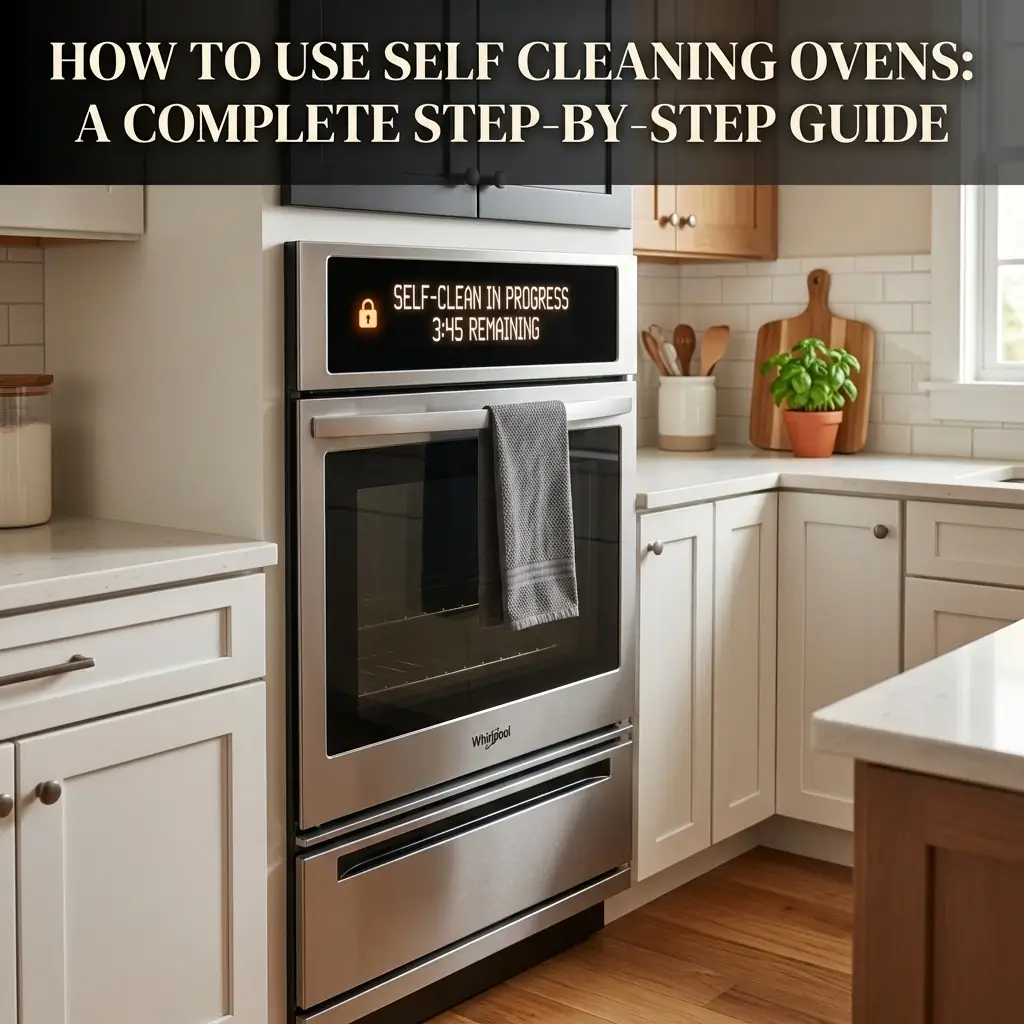
Learning how to use self cleaning ovens takes only a few minutes, and it saves you hours of scrubbing. A self cleaning oven uses intense heat or steam to burn baked on food into a fine ash that you simply wipe away. This guide covers every step, from prep to final wipe down, plus the benefits, safety tips, brand instructions, and quick fixes for common problems. By the end, you will run the cycle with total confidence.
To use a self cleaning oven, first remove the racks, cookware, and loose debris. Wipe the cavity with a damp cloth and close the door fully. Select the self-clean cycle on the control panel, then let the oven lock and heat. Once it cools, wipe away the leftover ash.
What Is a Self Cleaning Oven and What Does It Do?
A self cleaning oven is an oven with a special cycle that cleans the inside cavity for you. Instead of chemical sprays and hard scrubbing, it relies on heat or moisture to loosen grease and grime. The result is a fresh oven with almost no manual effort.
This feature reached kitchens in 1963. GE engineer Roy Chisholm found that raising the temperature above 1,000 degrees Fahrenheit turned soot and residue into ash, which led to the P-7 model marketed as the oven that cleans itself. According to McGill University’s Office for Science and Society, the technical name is the “pyrolytic method,” from Greek words meaning “fire” and “loosening.” So yes, self cleaning ovens do work, and they reach stuck on messes that hand cleaning often misses.
How Does a Self Cleaning Oven Work?
Two main methods power these ovens. Knowing which one you have helps you pick the right approach.
Pyrolytic (High-Heat) Cleaning
Pyrolytic cleaning uses very high heat to turn food residue into ash. The oven locks the door and raises the temperature until grease and spills break down completely. When the cycle ends and the cavity cools, a soft gray ash is all that remains. A quick wipe with a damp cloth finishes the job. Both electric and gas ovens can offer this high heat mode.
Steam Cleaning and AquaLift
Steam cleaning takes a gentler path. You pour a measured amount of water into the base of a cool oven, then start the cycle. Low heat and moisture soften light soil so you can wipe it clean. AquaLift technology works the same way, using low heat below 200 degrees Fahrenheit plus water to release baked on spills. Steam cycles finish faster and skip the intense heat, which makes them ideal for routine care between deeper cleans.
Benefits of Using the Self-Clean Function
Why let your oven clean itself? The advantages add up quickly.
- Saves time and effort. The cycle spares you hours of scrubbing and heavy manual work.
- Skips harsh chemicals. No spray cleaners means no stinging fumes lingering in your kitchen.
- Reaches every corner. High heat touches hard to reach spots that a sponge often misses.
- Contains the mess. All the grime stays sealed inside the cavity, so cleanup is simple.
- Works with insulation. Many high heat models are well insulated, which supports steady baking performance.
How to Use a Self Cleaning Oven Step by Step
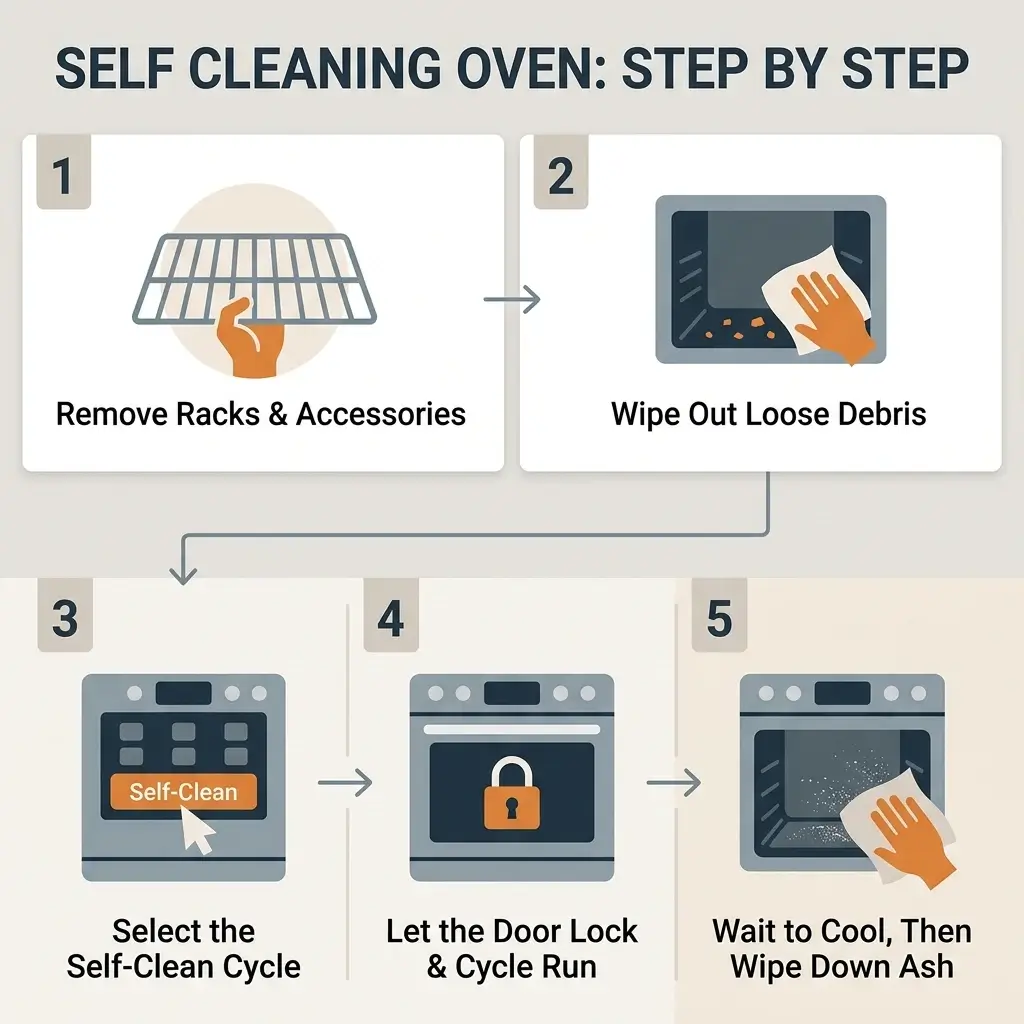
Step 2 shows wiping out loose food debris with a cloth. Step 3 shows selecting the self-clean
cycle on the oven’s control panel with orange highlighted button. Step 4 shows the oven door
automatically locking with a padlock icon during the cleaning cycle. Step 5 shows allowing
the oven to cool and wiping down the remaining ash residue with a cloth.
Ready to start? Follow these five steps for a smooth, safe cycle. Always check your owner’s manual first, since settings vary by model.
Step 1: Remove Racks, Cookware and Loose Debris
Take out the oven racks, broiler pan, and any cookware or foil. High heat can warp racks and dull their finish, so clean them separately in warm, soapy water. Clear the cooktop of pots and plastic items too.
Step 2: Wipe the Cavity and Avoid the Gasket
Wipe the oven cavity with a damp cloth to lift loose soil. This small step cuts down on smoke during the cycle. Be gentle around the oven gasket, the soft seal along the door, because that area does not get hot enough to clean and can bend under pressure. Clean the door glass now, since soil left there may leave streaks.
Step 3: Ventilate the Kitchen
Open a nearby window and switch on your range hood or exhaust fan. Fresh airflow clears heat, odor, and smoke from the room. Move pets, especially birds, to another well aired space, and keep children out of the kitchen while the cycle runs.
Step 4: Select and Start the Self-Clean Cycle
Close the oven door fully so it can lock. Press the self-clean button on the control panel, then choose a setting based on how dirty the oven is. Many models offer light, moderate, and heavy soil options. Press start if your oven requires it. The door will lock and the oven will heat.
Step 5: Let the Oven Cool and Wipe Away the Ash
When the cycle finishes, the oven stays locked until it cools to a safe temperature. Wait for the door to unlock on its own. Then wipe the ash from the cavity floor with a damp cloth. The smooth enamel coating makes this final wipe quick and easy.
Self-Cleaning Oven Best Practices: Do and Don’t
A few simple habits lead to the best results and protect your appliance.
| Do | Don’t |
| Keep the kitchen well aired with a window or fan open | Leave racks, foil, or cookware inside the cavity |
| Wipe out loose soil before starting to reduce smoke | Use commercial oven cleaner that can harm the enamel |
| Clean the door glass before the cycle | Force the locked door open before it cools |
| Stay home and check on the oven now and then | Block the oven vent, since air must move freely |
| Run a cycle before grime piles up | Keep pets and children in the kitchen during the cycle |
How Long Does a Self Cleaning Oven Take and How Hot Does It Get?
A high heat self cleaning cycle usually runs between 1.5 and 6 hours, depending on the model and soil level. Steam cycles are much shorter and often finish in under an hour. Remember to add roughly 45 minutes of cool down time before the door unlocks.
During a pyrolytic cycle, the oven reaches between 800 and 1,000 degrees Fahrenheit. That extreme heat is what turns grease into ash. Steam cycles stay far cooler, usually around 250 to 400 degrees, which is why they suit lighter messes.
Self Cleaning Oven Instructions by Brand
Buttons and labels differ across brands, yet the core steps stay the same. Here is a quick guide to common models.
GE and GE Profile Self Cleaning Oven Instructions
On a General Electric or GE Profile oven, remove the racks, then press the Self Clean pad and choose a cycle length. The door locks automatically. Once the display signals the cycle is done and the oven cools, the lock releases and you can wipe out the ash.
Whirlpool and Maytag Self Cleaning Ovens
These ranges often include soil level settings. Pick light, moderate, or heavy based on the mess, close the door, and start. Some models use AquaLift steam cleaning instead of high heat, so check whether yours asks you to add water.
Frigidaire Self Cleaning Oven Mode
To run Frigidaire self cleaning oven mode, clear the cavity, press Clean, and select a two-, three-, or four-hour cycle. The door locks and unlocks on its own. Wipe the cooled cavity when the cycle ends.
LG, Samsung and Kenmore Self Cleaning Ovens
LG, Samsung, and Kenmore ovens follow the same rhythm. Empty the oven, select the self-clean cycle, and let the door lock. After cooling down, a light wipe leaves the interior fresh. Your manual lists the exact cycle names for your unit.
Is a Self Cleaning Oven Safe? Dangers to Know
Used correctly, a self cleaning oven is safe, and its built in door lock protects you from the heat. Still, a few points deserve care. As the oven burns off food, it can release small amounts of carbon monoxide and light fumes. Teflon style coatings inside some ovens may also give off fumes at very high temperatures.
Fresh air keeps things comfortable, so ventilate well every time. People with asthma benefit from staying clear of the kitchen during the cycle. Can a self cleaning oven harm you? In a well aired room with a working carbon monoxide detector, the risk stays very low. A little planning keeps everyone, including pets, breathing easy.
What Not to Leave Inside During the Cycle
Clearing the oven fully is one of the most important prep steps. Leave these items out every time:
- Oven racks: which can warp and lose their shine under high heat.
- The broiler pan and cookware: which the cycle can discolor.
- Aluminum foil and oven liners: which may melt or damage the surface.
- Plastic items on the cooktop: which can warp from the heat rising through the range.
Large food chunks belong in the trash, not in the cavity, since they add smoke and can spark a small flare up.
How to Stop or Turn Off a Self Cleaning Oven Early
You can cancel the cycle at almost any time by pressing Cancel or Off on the control panel. Keep one thing in mind though: the door stays locked until the oven cools to a safe temperature. Forcing it open can cause damage, so give it time. Once the cavity cools, the lock releases and you can open the door as usual.
Self-Cleaning Oven Problems and Quick Fixes
Now and then a cycle ends with a hiccup. Here are the most common issues and how to handle them.
Oven Door Won’t Unlock After Self-Cleaning
Most doors unlock 30 to 90 minutes after the cycle, once the temperature drops to a safe level. Heavily soiled ovens cool more slowly, so patience helps. If the oven feels cool but the door stays locked, unplug the unit or flip the breaker for a few minutes. This reset often releases a stuck electronic latch, especially after a power blip. Never force the door, since that can break the latch, bend hinges, or crack the glass.
Error Codes Like F9
An F9 code points to the door lock assembly, which engages during the self-clean cycle. It appears when the control board cannot lock or unlock the mechanism properly. First, wait for full cool down, then try a power reset. If the code returns, call a qualified technician, since the lock motor or control board may need service.
Oven Won’t Start or Turn On After the Cycle
High heat can stress internal parts like the thermal fuse or control board. If the oven seems dead after a cycle, check the breaker first and give it time to cool. Should the problem continue, a professional repair is the safe next step.
How to Clean an Oven Without the Self Clean Cycle
Prefer to skip the high heat? Cleaning an oven without self clean is simple and gentle on the appliance. Mix baking soda with a little water to form a paste, then spread it across the interior. Let it sit for a few hours or overnight. Wipe the paste away with a damp cloth, and spray any stubborn spots with diluted vinegar for extra lift. This by hand method suits light messes and quick touch ups between deeper cleans.
Can You Use Oven Cleaner on a Self Cleaning Oven?
Skip commercial oven cleaner on a self cleaning oven. Those harsh sprays can damage the special enamel coating and leave fumes behind. Reach instead for mild, non abrasive options like dish soap, a baking soda paste, or vinegar diluted in water. Your owner’s manual confirms which cleaners are safe for your model.
How Often Should You Use the Self-Clean Function?
Frequency depends on how often you cook and how quickly soil builds up. For most homes, a cycle every four to six months keeps the oven fresh. Since the intense heat adds wear over time, using the feature sparingly protects the oven components. Running it before grime piles up also leads to less smoke and a faster clean. One handy tip: wipe fresh spills as they happen so you rarely need the full cycle at all.
Frequently Asked Questions
Can I leave the racks in the oven when I self-clean?
It is best to remove the racks first. The intense heat can warp them and dull their finish. Clean them separately with warm, soapy water to keep them working well.
Can you stay in the house while the self-cleaning oven is on?
Yes, you can stay home during the cycle. Just keep the kitchen well aired with an open window or exhaust fan. It is also wise to check on the oven now and then rather than leaving the house entirely.
Do you add water to a self-cleaning oven?
High heat pyrolytic ovens need no water. For a steam or AquaLift cycle, you add a small measured amount of water to the base. Your manual lists the exact amount for your model.
Can you clean a self-cleaning oven manually?
Absolutely. A baking soda paste and a damp cloth handle most messes by hand. Many owners mix manual wipe downs with the occasional self-clean cycle for the best results.
What is the difference between self-clean and steam-clean?
Self-clean uses very high heat to turn residue into ash and locks the door for safety. Steam-clean uses water and lower heat to soften light soil, finishes faster, and skips the door lock.