
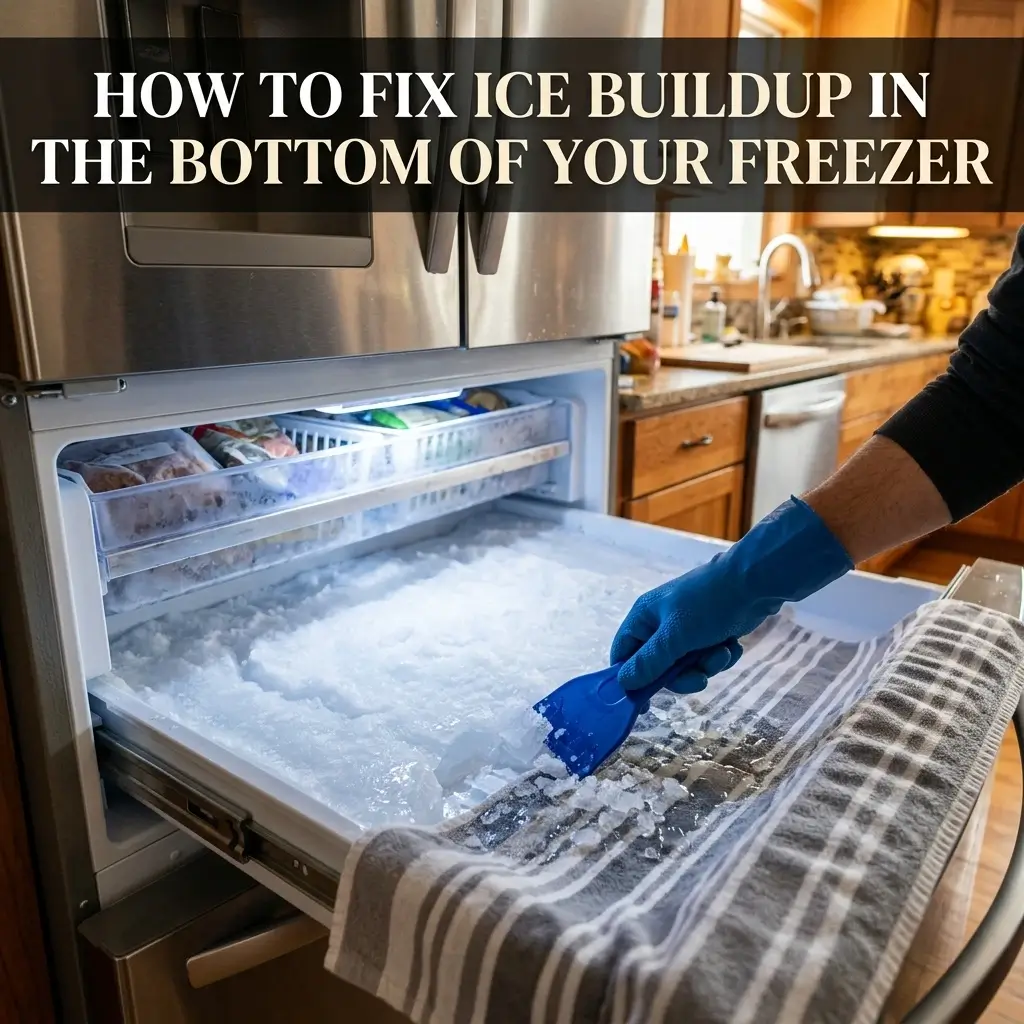
Ice buildup in the bottom of your freezer almost always comes from a clogged defrost drain, a worn door seal, or a defrost system that has stopped cycling properly, and most homeowners can clear it and stop it from returning within a single afternoon. That layer of ice at the bottom of the compartment is not just annoying; it eats up storage space and makes your freezer work harder to stay cold. The good news is that the cause is usually easy to spot once you know what to look for. This guide walks you through why ice forms, how to remove it safely, and how to keep it from coming back.
Ice buildup in the bottom of a freezer is most often caused by a clogged or frozen defrost drain, a worn door seal that lets in warm air, or a failing defrost heater or thermostat. Overloading the freezer and leaving the door open too long also contribute. Clearing the drain, checking the seal, and defrosting the unit fixes most cases without a service call.
Ice Buildup at a Glance
Use this table to match your situation to the likely cause and fix.
| What You Notice | Likely Cause | What To Do |
| Ice sheet on the floor of the freezer | Clogged or frozen defrost drain | Defrost the unit and flush the drain tube |
| Frost on the back wall behind food | Failing defrost heater or thermostat | Check for continuity or call a technician |
| Ice around the door edge or on the door itself | Worn or torn door seal | Inspect and replace the gasket |
| Drawer stuck or frozen shut | Ice buildup around the drawer track | Fully defrost, dry the track, do not force it |
| Water on the floor near the freezer | Overflowing drain pan from melted ice | Clear the drain, check the pan is seated correctly |
| Frost around the ice maker | Warm air entering through the ice chute | Check the chute flap for ice or debris |
Why Ice Builds Up in the Bottom of Your Freezer
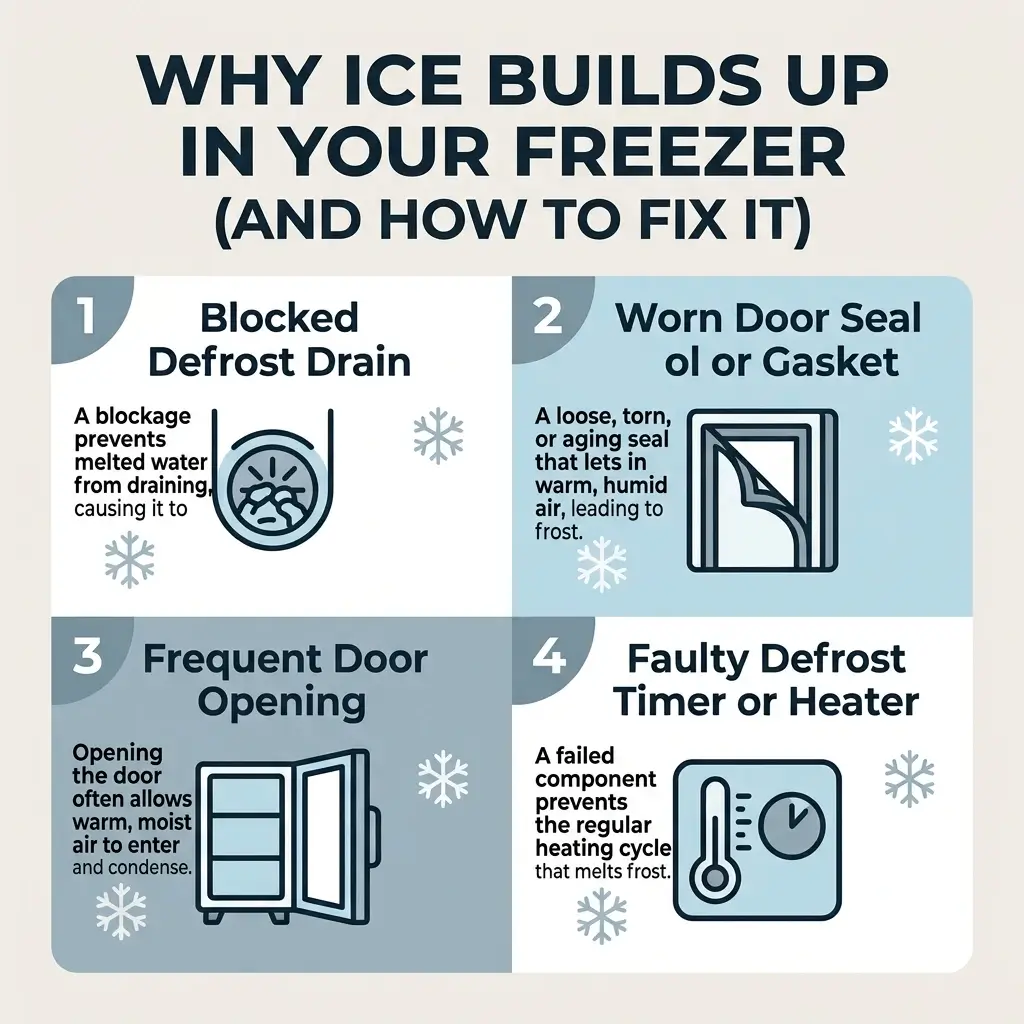
A few specific problems are behind almost every case of ice buildup in the bottom of your freezer. Knowing which one you are dealing with saves time before you start troubleshooting.
A Clogged or Frozen Defrost Drain
Most freezers melt a small amount of frost automatically and send that water down a defrost drain to a pan near the compressor, where it evaporates. If that drain gets blocked by ice or debris, the water has nowhere to go. It puddles at the bottom of the freezer and refreezes into a solid sheet.
A Worn or Damaged Door Seal
The rubber gasket around the door keeps warm, moist air out. Once it cracks, tears, or stops sitting flush, humid air slips in every time the door closes. That moisture freezes fast, especially near the bottom of the compartment where cold air settles.
A Failing Defrost System
Frost free freezers rely on a defrost heater, thermostat, and timer working together to melt ice off the evaporator coils on a schedule. When one of these parts fails, frost keeps building instead of melting away, and eventually it spreads to the floor of the freezer.
Overloading or Blocked Air Vents
Packing the freezer too full blocks the vents that circulate cold air. This creates warm pockets where moisture condenses and freezes, often in the corners and along the bottom.
Frost or Solid Ice? Why the Difference Matters
A thin, powdery layer of frost is usually normal, especially in older or manual defrost models. Solid, hard ice at the bottom of the compartment is a different story. It signals that water has actually pooled and frozen, which almost always points to a drain problem rather than simple humidity. If you are scraping frost off the walls, focus on the door seal and airflow. When you are chipping at a solid ice layer on the floor, focus on the drain first.
How to Fix Ice Buildup in the Bottom of Your Freezer Right Now
Step 1: Remove Food and Unplug the Freezer
Move everything into a cooler or a second freezer to keep it cold while you work. Unplug the unit so it stops generating cold air and can begin to thaw.
Step 2: Lay Down Towels
Place towels around the base and inside the freezer to catch melting ice. This protects your floor and keeps the area safe to walk on.
Step 3: Let the Ice Melt Naturally
Prop the door open and give the ice time to melt on its own. This can take a few hours depending on how thick the buildup is. Avoid chipping at it with a knife or scraper, since this can puncture the interior liner or damage a hidden coil.
Step 4: Speed Up Melting Safely (Optional)
If you do not want to wait, place a bowl of hot water inside the freezer and close the door for fifteen to twenty minutes at a time. The steam helps loosen the ice faster without any risk of scratching or puncturing the interior.
Step 5: Clean and Dry the Interior
Once the ice is gone, wipe down the inside with warm water and a mild detergent, or a little baking soda if you want to tackle odors at the same time. Dry every surface completely, including corners and the door seal, since leftover moisture will just refreeze.
Step 6: Plug It Back In and Restock
Reconnect the freezer and give it time to reach temperature before putting food back inside, usually about an hour.
Is Your Bottom Freezer Drawer Frozen Shut?
If the drawer itself will not open, resist the urge to force it, since this can bend the track or crack the plastic housing. Follow the same defrost process above, but pay extra attention to drying the drawer track and the seal around it once the ice has melted. A drawer that keeps freezing shut on a regular basis usually points to the same drain or door seal issues covered above, just concentrated in one spot.
How to Stop Ice From Coming Back
Check and Clean the Door Seal
Run your fingers along the gasket looking for cracks, tears, or spots that do not sit flush. A simple test works well here too. Close a dollar bill in the door and pull it out. If it slides out with no resistance, the seal needs attention.
Set the Right Temperature
Keep your freezer between 0°F and negative 5°F. Colder is not always better, and a setting that is too aggressive can actually contribute to unnecessary frost.
Avoid Overloading the Freezer
Leave space between items so cold air can move freely. A freezer packed to the ceiling blocks airflow and creates the warm pockets where ice starts to form.
Clear the Defrost Drain Regularly
Check the drain opening every few months for debris or ice. A quick flush with warm water keeps it clear before a clog has a chance to build.
Keep the Condenser Coils Clean
Dusty condenser coils behind or beneath the unit can restrict airflow and push debris toward the drain over time. Vacuum them once or twice a year to keep the whole system running the way it should.
Let Hot Food Cool Before Storing It
Warm containers raise humidity inside the freezer the moment the door closes. Give food time to cool to room temperature first.
Brand Specific Notes for Common Ice Buildup Issues
Most causes of ice buildup apply across every brand, but a few details are worth knowing for specific manufacturers.
Whirlpool
Whirlpool freezers commonly show ice buildup tied to a failing defrost heater, thermostat, or a blocked drain strap near the evaporator. Whirlpool’s own freezer troubleshooting guide walks through checking the coils and vents before assuming a part has failed.
Samsung
Samsung freezers often ice up at the bottom when the door is not closing fully or the seal has lost its grip. Samsung’s support page on this exact issue confirms this is the most common cause and offers a simple paper test to check the seal.
LG
LG freezers with a bottom mount design can develop ice around the drawer track when the door seal weakens. Cleaning the track and checking the gasket usually resolves it.
Frigidaire
Frigidaire freezers commonly show ice tied to the defrost drain, since the check valve inside the drain area can trap water and cause it to back up and refreeze.
Electrolux
Electrolux freezers tend to show frost around the back wall first when the defrost heater is starting to fail, before it spreads toward the bottom of the compartment.
When to Call a Professional
DIY defrosting and cleaning solves most cases of ice buildup. A professional visit makes sense if ice keeps returning within days of a full defrost, if you hear clicking near the evaporator fan, or if the defrost heater and thermostat test as faulty. Persistent drainage problems or a failing control board are best left to a trained technician. If you are dealing with a freezer that keeps icing up despite your best efforts, our refrigerator repair service team can diagnose the exact cause and fix it.
FAQs About Freezer Ice Buildup
What causes ice buildup in the freezer bottom?
A clogged defrost drain is the most common cause. A worn door seal, a failing defrost heater, or overloading the freezer can also lead to ice collecting at the bottom.
Does a faulty door seal cause ice buildup?
Yes. A cracked or loose gasket lets warm, moist air into the freezer every time the door closes, and that moisture freezes quickly.
Is a manual defrost needed to clear the ice, or will it come back?
A manual defrost clears existing ice, but if the underlying cause, like a clogged drain or bad seal, is not fixed, the ice will return.
Will removing ice with a tool or knife damage the freezer liner?
It can. Chipping at ice with a sharp object risks puncturing the interior or damaging a hidden coil, so natural melting is the safer choice.
Why does my freezer have a sheet of ice at the bottom?
This usually means water from a defrost cycle could not drain properly and froze in place, most often due to a blocked defrost drain.
Why is there ice at the bottom of my freezer even after I clean it out?
If ice keeps coming back, the root cause has not been addressed. Check the door seal and defrost drain, since simply removing the ice will not fix either problem.
What temperature should a freezer be set to prevent ice buildup?
Between 0°F and negative 5°F is the recommended range. Setting it colder than necessary can contribute to extra frost.
How long does it take to fully defrost a freezer?
Natural thawing typically takes a few hours depending on how much ice has built up. Using a bowl of hot water inside can speed this up.
Why does my bottom freezer drawer keep freezing shut?
This usually points to the same causes as general ice buildup, concentrated around the drawer track. A full defrost followed by thorough drying of the track and seal usually solves it.
Is a small amount of frost normal, or does it always mean a problem?
A light layer of frost is normal in many freezers, especially manual defrost models. A thick or solid layer of ice is not normal and points to a specific cause worth addressing.
A little ice in the freezer is common, but a solid layer at the bottom always has a specific cause behind it. Work through the steps above, and your freezer should stay clear and running the way it should.