

Most common dishwasher issues come from a clogged filter, a blocked spray arm, low rinse aid, or simple habits like overloading the racks, and you can fix nearly all of them yourself in under fifteen minutes. A dishwasher that stops cleaning, draining, or starting properly can throw off your whole kitchen routine. Before you call a repair technician, a few quick checks often solve the problem. This guide walks you through the seven most common dishwasher issues, what causes them, and how to fix each one step by step. If a fix does not hold, our dishwasher repair service team can take it from there.
Common dishwasher issues include poor cleaning, standing water, a cycle that will not start, dishes that stay wet, leaks, loud noises, and bad smells. Most of these problems trace back to a dirty filter, a blocked spray arm, low rinse aid, overloading, or the wrong detergent. Cleaning the filter and checking these basics fixes most issues without a service call.
Common Dishwasher Issues at a Glance
Use this table to spot your problem fast and jump to the right fix.
| Symptom | Likely Cause | Quick Fix |
| Dishes still dirty | Clogged spray arm or filter | Remove and rinse the filter and spray arm holes |
| Standing water at the bottom | Blocked drain hose, filter, or air gap | Clean the filter and check the hose and air gap for blockages |
| Won’t start or begin a cycle | Door not latched or child lock on | Close the door firmly and check the lock setting |
| Dishes still wet | Low rinse aid or eco setting on | Refill the rinse aid dispenser and switch to heated dry |
| Water on the kitchen floor | Worn door gasket or too much detergent | Inspect the seal and use the correct detergent amount |
| Loud grinding or rattling | Loose item or debris in the pump | Check for utensils blocking the spray arm |
| Bad smell | Trapped food or grease | Clean the filter and run a hot cycle with vinegar or baking soda |
7 Troubleshooting Tips to Fix Common Dishwasher Issues
These seven tips cover the habits and quick checks that solve most dishwasher problems before they turn into a repair bill.
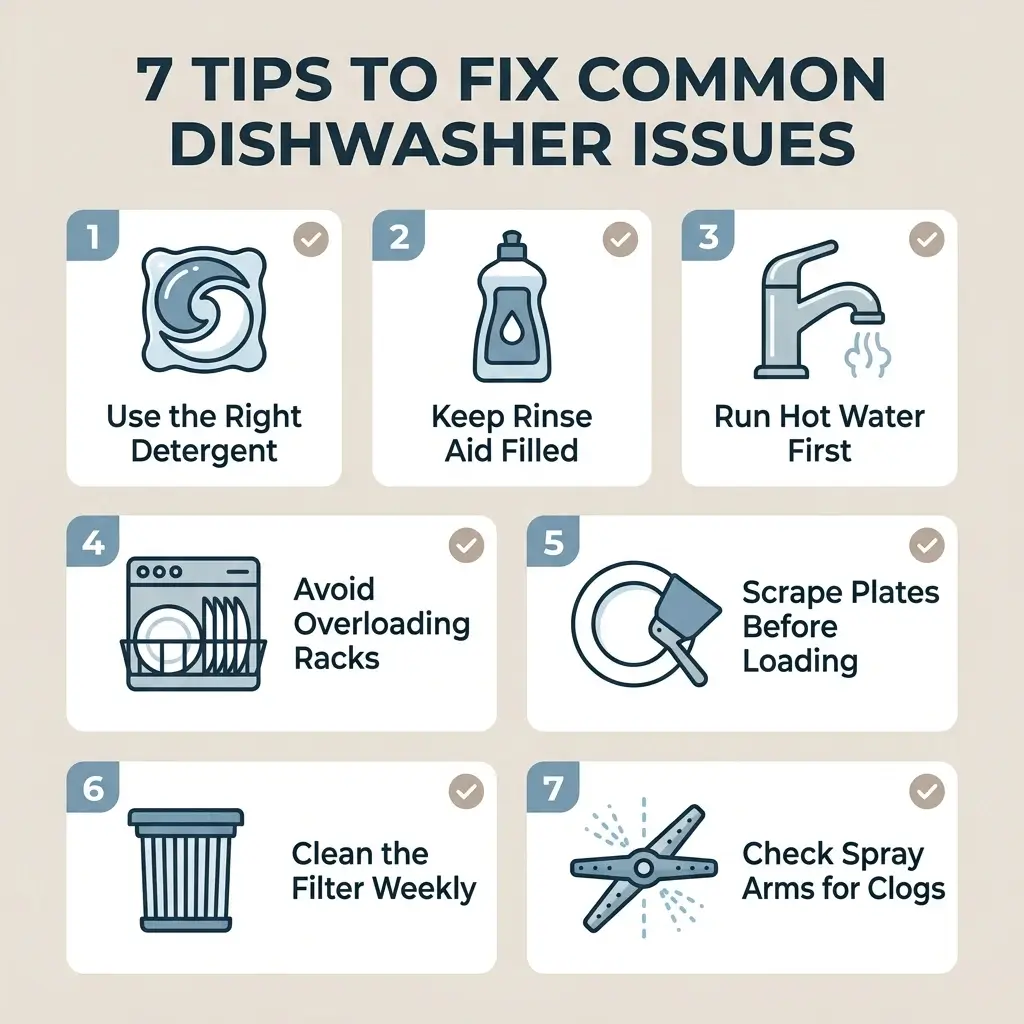
1. Use the Right Detergent
Dish soap and dishwasher detergent are not the same product. Dish soap creates too many suds and can force water out through the door or vents. Always fill the detergent dispenser with a product made for dishwashers, whether it is a pod, gel, or powder.
2. Keep the Rinse Aid Filled
Rinse aid helps water slide off dishes instead of forming droplets that dry into spots. Low rinse aid is one of the most common causes of cloudy glasses and wet dishes at the end of a cycle. Check the rinse aid dispenser once a month and refill it as needed.
3. Run Hot Water Before You Start
Your dishwasher pulls water from the same line as your kitchen sink through the water inlet valve. If that water is cold, the wash cycle starts cold too, and dishes will not get as clean. Run the sink faucet until the water feels hot, then start the dishwasher right away.
4. Avoid Overloading the Racks
Packing in one more dish feels efficient, but it blocks the spray arm and stops water from reaching every surface. Leave space between plates and bowls so water and detergent can circulate freely.
5. Scrape Plates Before Loading
Large food scraps can clog the filter or damage the drain pump over time. Scrape off anything solid before loading, but do not rinse every trace of food away. A little residue actually helps the detergent work as designed.
6. Clean the Filter Every Week
A dirty filter is the top cause of poor cleaning, bad smells, and drainage trouble. Most modern dishwashers have a removable filter near the bottom of the tub. Pull it out, rinse it under warm water, and put it back in place.
7. Check the Spray Arms for Clogs
Mineral deposits and food particles can block the small holes in the spray arms. Remove the arms, rinse them, and clear any blocked holes with a toothpick. Spin them by hand to confirm they move freely before running a cycle.
Dishwasher Not Draining? What to Check
Standing water at the bottom of the tub after a cycle points to a drainage problem. Start with the filter, since trapped food is the most frequent cause. Next, check the drain hose under the sink for kinks or clogs. Many sinks also have a small air gap near the faucet that prevents backflow, and this can clog with debris over time.
If your dishwasher drains through a garbage disposal, run the disposal briefly to clear any blockage in the shared line. A newly installed disposal sometimes still has a plastic knockout plug in place, which blocks the connection entirely. Persistent drainage trouble after these steps usually means the drain pump needs professional attention.
Dishwasher Won’t Start or Powers On But Won’t Begin a Cycle
A dishwasher that stays silent usually has a simple cause. Check that the door is closed firmly, since most models will not run unless the latch clicks into place. Confirm the child lock is off, since this feature blocks the controls on purpose. Reset the breaker if the unit has no power at all.
A dishwasher that powers on, lights up, or beeps but never begins washing is a slightly different problem. This often points to a delayed start setting left on by accident, a stuck door switch, or a control board that is not sending the signal to begin the cycle. Cancel any delay setting first, then try a full reset by turning off power at the breaker for a minute before restoring it.
Dishwasher Not Drying Dishes Properly
Warm, wet dishes at the end of a cycle usually mean the rinse aid is low or the heated dry setting is turned off. Plastic containers hold moisture longer than glass or ceramic, so a few damp items are normal. A sudden drop in drying performance across every load can point to a failed heating element or high limit thermostat, which is worth a professional check.
Dishwasher Leaking Water
Water pooling on the kitchen floor often comes from a worn door gasket or too much detergent creating excess suds. Inspect the rubber seal around the door for cracks or trapped food. Confirm you are using dishwasher detergent, not dish soap, and that dishes are loaded so nothing blocks the door from sealing.
Dishwasher Making Unusual Noises
A soft hum during the wash cycle is normal. Loud grinding, rattling, or banging is not. Loose utensils touching the spray arm are the most common cause. Open the door mid cycle and check that nothing has fallen to the bottom of the tub. Debris caught in the pump can also cause a grinding sound and may require a closer look.
Dishwasher Smells Bad
A dishwasher should smell clean, not musty. Odors build up when food particles or grease collect in the filter, sump, or door seal. Clean the filter, wipe the rubber gasket with a damp cloth, and run an empty hot cycle with a cup of white vinegar or a sprinkle of baking soda on the tub floor once a month to keep smells away.
Brand Specific Dishwasher Troubleshooting Notes
Most dishwasher troubles apply across every brand, but a few details differ by manufacturer.
Bosch
Bosch dishwashers with an AutoAir feature need level installation and clear space around the door to vent properly. If the buttons stop responding, a quick power reset or checking the child lock usually solves it. Bosch maintains an official troubleshooting guide for model specific fixes.
GE
GE dishwashers often flash lights or beep to signal an issue rather than showing a text error. Their official dishwasher support page lists model specific fixes for draining, drying, and washing problems.
Samsung
Samsung dishwashers commonly show a numbered error code on the display when something is wrong, which narrows down the cause faster than guessing. Check your owner’s manual for the code chart before assuming a part has failed.
Whirlpool
Whirlpool dishwashers usually respond well to a manual reset. Hold the Start or Cancel button for a few seconds to clear a stuck cycle before checking individual parts.
Frigidaire
Frigidaire dishwashers often show drainage issues tied to the check valve inside the drain sump, in addition to the usual filter and hose checks.
Troubleshooting a Countertop or Portable Dishwasher
Countertop and portable dishwashers use the same basic parts as full size models but connect through a faucet adapter instead of a fixed water line. If your unit will not fill, check that the adapter is seated correctly on the faucet and that the hose has no kinks. Poor cleaning results are often tied to overloading, since these smaller units have less room for water to circulate. Clean the filter just as often as you would on a built in dishwasher, since the smaller tub fills with food debris faster.
When to Call a Professional vs When to Replace Your Dishwasher
DIY steps solve most dishwasher problems, but some need a trained technician. Persistent leaks, electrical faults, and a failed drain pump or control board are best left to a professional. As a general guide, if your dishwasher is older and a repair would cost close to half the price of a new unit, replacement is usually the better value. If you are in Livonia or the surrounding area and need a hand, you can contact our team to schedule a visit.
How to Prevent Dishwasher Problems Before They Start
A short weekly routine keeps most issues from starting in the first place.
- Clean the filter once a week
- Check the rinse aid dispenser monthly
- Wipe the door seal with a damp cloth
- Run a hot cycle with vinegar or baking soda once a month
- Inspect spray arms for clogs every few months
- Scrape large food scraps before loading
FAQs About Common Dishwasher Issues
Why is my dishwasher not cleaning dishes well?
This usually comes from a clogged filter, blocked spray arm, or overloaded rack. Clean both parts and load dishes with space between them for the best results.
Why won’t my dishwasher start?
Check that the door is closed and latched, the child lock is off, and the breaker has not tripped. A delayed start setting can also make it seem like the dishwasher is not starting.
Why is my dishwasher not drying dishes?
Low rinse aid or a disabled heated dry setting are the most common reasons. Plastic items also hold water longer than glass or ceramic.
How often should I clean my dishwasher filter?
Clean the filter about once a week to prevent clogs, odors, and poor cleaning performance.
When should I replace my dishwasher instead of repairing it?
Consider replacement if the unit is older and a repair would cost close to half the price of a new dishwasher, or if problems keep coming back.
What is the average lifespan of a dishwasher?
Most dishwashers last around ten years with regular care, including filter cleaning and prompt attention to small issues.
Why does my dishwasher smell bad?
Trapped food and grease in the filter or door seal are the main causes. A monthly vinegar or baking soda cycle keeps odors from building up.
Can I use regular dish soap in a dishwasher?
No. Dish soap creates too many suds and can force water out of the door or vents. Always use detergent made for dishwashers.
Why are my dishes cloudy or spotted after washing?
Hard water minerals are the usual cause. A rinse aid and the correct detergent amount both help reduce spotting.
What are the most common dishwasher complaints?
Poor cleaning, standing water, a cycle that will not start, wet dishes, leaks, noise, and bad odors are the most common complaints homeowners report.
Most dishwasher problems come down to a few habits and a clean filter. Work through these seven tips, and your dishwasher should be back to running full cycles without a fuss.