
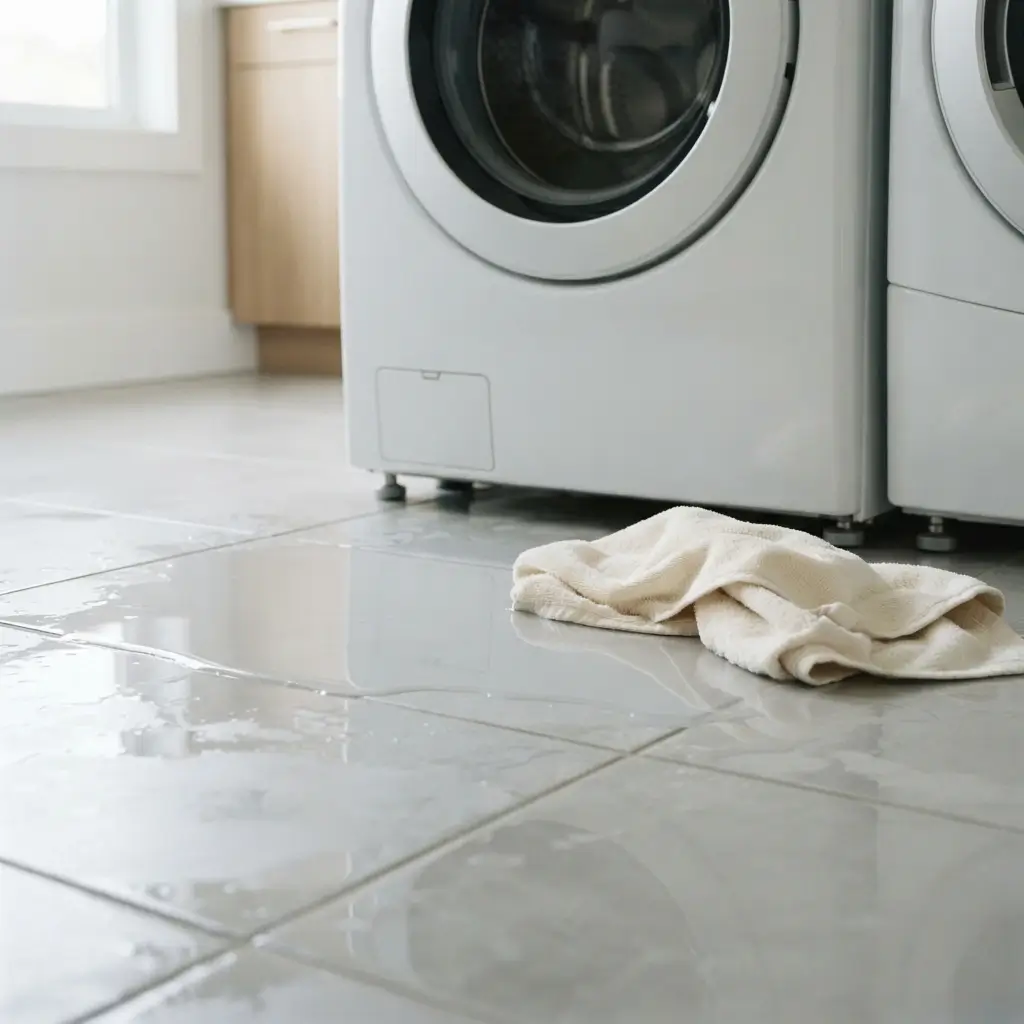
A washing machine leaking water from the bottom almost always traces back to one of four things: a hose, the drain pump, a worn seal, or too much detergent. Water pools under the cabinet and looks alarming. In most cases the fix is smaller than the puddle suggests.
The key is knowing where to look. Water travels along panels and floors before it reaches your eyes, so the puddle rarely sits where the leak starts. Timing tells you far more than location.
A washing machine leaking water from the bottom usually traces back to a cracked fill or drain hose, a failing drain pump, a torn door boot gasket, or excess detergent suds. Note exactly when the water appears: during fill, wash, spin, drain, or while the machine sits idle. That timing identifies the source.
Do This First: Stop the Water and Protect the Floor
Take sixty seconds for these steps before you diagnose anything.
- Stop the cycle and unplug the washer, or switch off the breaker if the plug sits near water
- Close the hot and cold supply valves on the wall behind the machine
- Photograph the water before you wipe it, including the front edge, the side, and the floor behind
- Dry the area with towels to keep the floor safe underfoot
- Check whether water has reached an outlet, a stacked dryer, or a floor seam
Water near electrical parts changes everything. Keep the machine off and call a technician if the puddle has touched the cord, the outlet, or the control panel.
The Fastest Way to Diagnose: Watch When the Leak Appears
This is the step most homeowners skip, and it saves the most time. Once the area is dry and safe, run one short cycle and watch closely. Write down the moment water shows up.
| When water appears | Likely source | Check this |
| During fill | Fill hose, faucet connection, water inlet valve | Hot and cold hose connections at the wall and washer |
| During wash or tumble | Door boot gasket, detergent dispenser, excess suds | Door seal face, dispenser drawer, suds level in drum |
| During drain | Drain hose, standpipe, drain pump, pump filter cap | Drain hose seating, pump filter door, standpipe |
| During spin | Loose hose, tub seal, off balance load | Vibration, whether the machine walks, leveling feet |
| While the washer is off | Water inlet valve, dripping supply valve | Faucet area and hose fittings with the machine idle |
Manufacturer guidance backs this approach. Maytag’s troubleshooting guide separates leaks by cycle stage too, pointing fill and agitation leaks toward the tub seal and spin leaks toward leveling and the pump.
One watched cycle beats five guesses. Skip repeated full loads, since they spread water without adding information.
Water Under the Washer Does Not Always Mean the Washer
Here is the mistake that costs people money. A puddle under the cabinet does not prove the appliance failed.
Several other sources create the same puddle:
- A backed up standpipe. Water rises out of the drain pipe during the drain stage and pools on the floor. That is a plumbing issue, not an appliance one.
- A nearby laundry sink or floor drain. Both can overflow during the same minute the washer drains.
- A stacked dryer supply line or a water heater in the same closet. Shared frames carry water sideways before it drips.
- An uneven floor. Water from a rear hose can run forward and appear at the front edge, which makes a rear leak look like a front one.
Describe what the water did rather than naming a part. “Front left during drain” helps a technician. “The pump is bad” often sends the repair down the wrong path.
Why Your Washing Machine Is Leaking Water from the Bottom: Front Load Causes
Front loaders hold water against a door seal every cycle, so they fail in specific ways.
Front Load Washer Door Seal Leaking
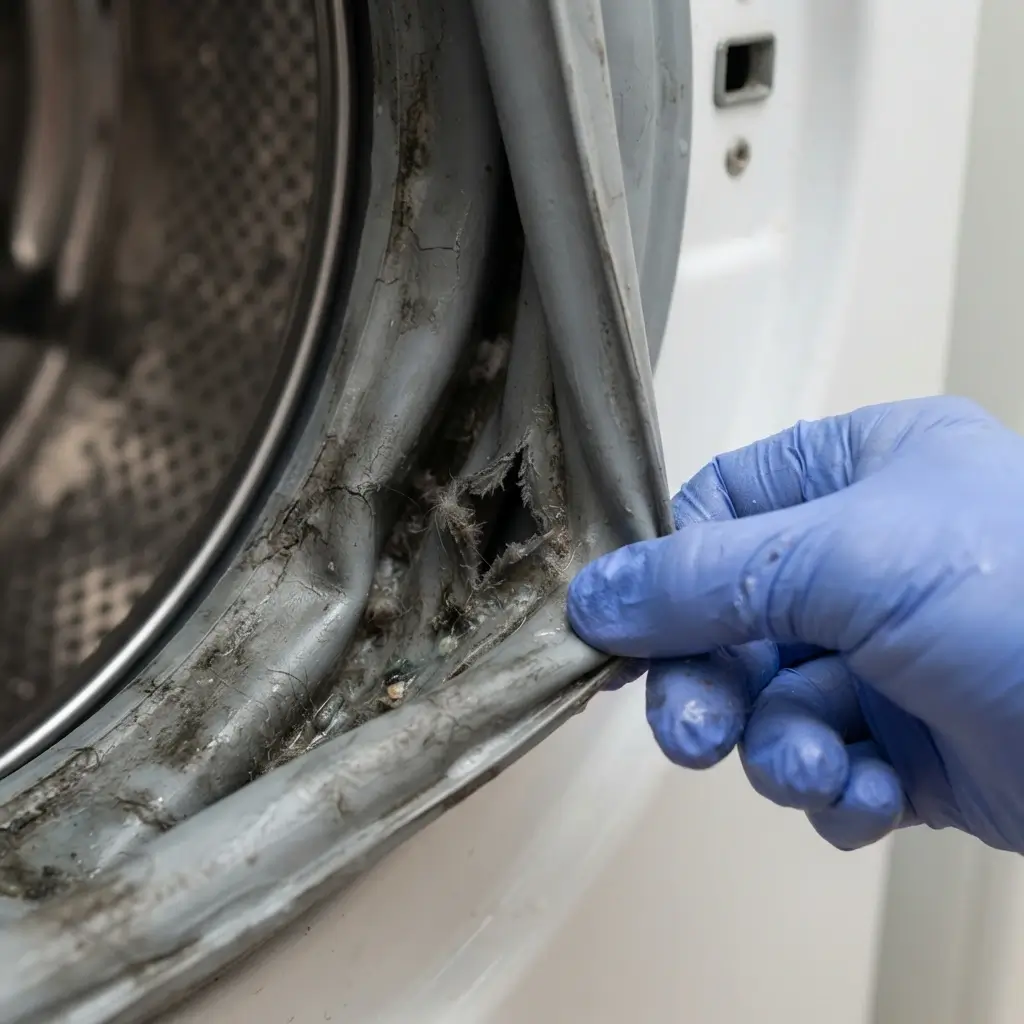
The door seal creates the watertight barrier between the drum and the door. Water escapes the moment that barrier breaks. Hair, coins, pet fur, and shirt strings collect in the fold and hold the seal open. Detergent residue builds there too.
Wipe the seal face after each load. Check the lower fold, where debris settles.
Torn Door Boot Gasket: How to Spot It
The door boot gasket is the thick rubber ring itself. Pull the fold open gently and look along the bottom third, since that section sees the most water and wear. A crack, a tear, or a soft spot means replacement.
Replacing a door boot takes special tools on many models. Leave this one to a technician.
Detergent Drawer and Dispenser Overflow
Residue builds inside the dispenser housing over months. Water then backs up and spills down the inside of the cabinet, arriving at the floor as a bottom leak.
Remove the drawer and rinse it with warm water. Clean the cavity behind it too.
Pump Filter Cap Left Loose After Cleaning
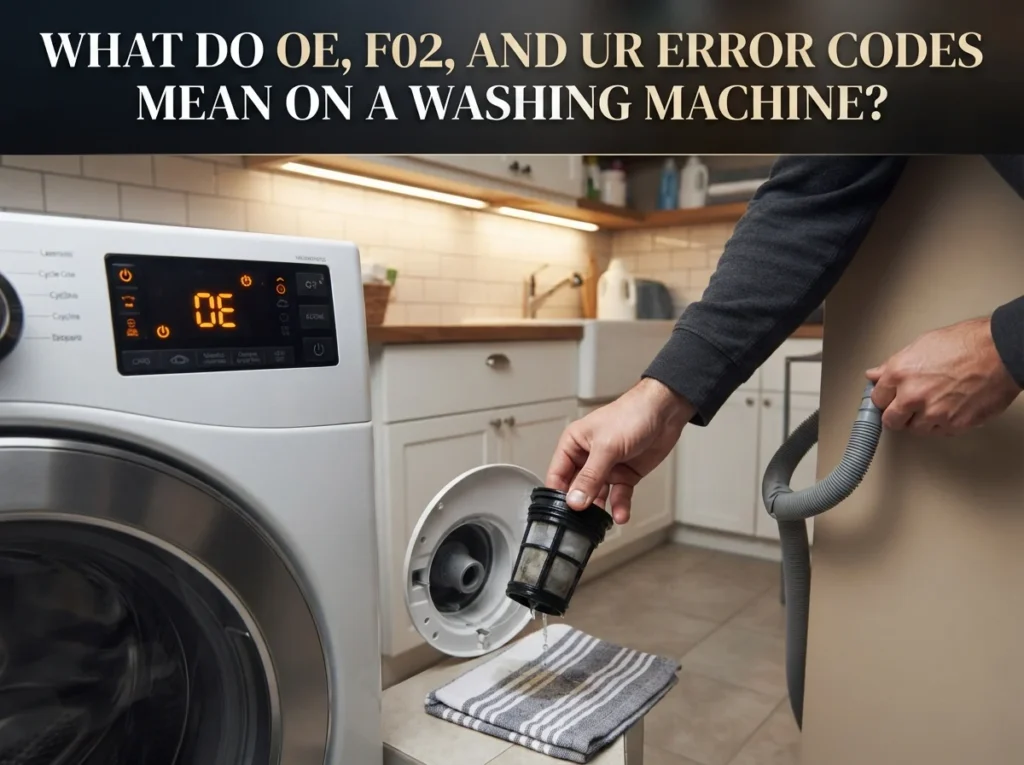
Many front loaders have a small access door at the bottom front. Behind it sit the pump filter and a short drain hose with a cap. Both must thread cleanly and seat fully.
A leak that starts right after you cleaned the filter points straight here. Reseat the cap and the filter. Stop if either one will not thread smoothly.
Top Load Washer Leaking from the Bottom: Different Causes
Top loaders spin on a vertical axis and hold water differently, so their weak points differ.
Tub Cover Gasket
This gasket seals the outer tub to the tub cover. Water sprays out during the spin cycle when it fails, then runs down the inside wall and reaches the floor.
Cracked Outer Tub
Your washer holds two tubs. The inner one has holes and spins. The outer one holds the water. A crack in that outer tub releases water during fill and wash.
Repair means disassembly, so a technician should confirm the diagnosis before you commit.
Leftover Shipping Plug After Installation
New top loaders ship with a plug in the drain outlet. Installers occasionally leave it in place. Water then backs up and escapes at the bottom on the very first loads.
Check this first if the leak started with a brand new machine.
Causes That Hit Both Washer Types
Washing Machine Hose Leaking: Fill, Drain, and Internal
Hoses cause more laundry room floods than any other part.
Fill hoses carry water in from the wall. Look for cracks, splits, rust at the fittings, and moisture at the connection. Replace both hoses together when one fails, and plan on new hoses every three to five years even when they look fine.
The drain hose carries used water out. Cracks form over time, clamps loosen, and the hose slips out of the standpipe. Reseat it firmly and secure the clamp.
Internal hoses run between components inside the cabinet, including the tub to pump hose. These sit behind panels, so a technician should handle them.
Washer Drain Pump Leaking
The drain pump pushes water out at the end of each cycle. Cracks form in the housing, and the clamps that hold its hoses can loosen. A washer drain pump leaking usually shows itself during the drain stage, often with a grinding or humming sound.
Water pooling near the front bottom corner during drain fits this pattern well.
Washing Machine Tub Seal Leaking
The tub seal sits where the drive shaft enters the tub. Water works past it slowly as the seal ages, then drips down the transmission and onto the floor. Leaks during fill and agitation point here.
Watch for a second clue: oily residue in the water. That signals the transmission seal alongside the tub seal, and both call for professional service. Our washing machine repair team handles pump, tub seal, and door boot replacements across Livonia.
Water Inlet Valve: The Leak That Happens While the Washer Is Off
The inlet valve opens to let water in and closes to shut it off. A worn valve seeps even when the machine sits idle, which is why the puddle appears on days you did no laundry at all.
Mineral deposits and small cracks on the valve body confirm it.
Water Level Switch and an Overfilled Tub
The water level switch tells the washer when to stop filling. Water rises past the safe line when that switch fails, then overflows and escapes wherever it can, including the bottom. A drum that looks fuller than usual is your clue.
Habits That Cause Leaks
Sometimes the machine works fine and the routine needs a small edit.
Too Much Detergent: Washer Leaking Suds
Excess soap creates a mountain of foam. Suds then push water past seals and overflow routes that normally hold just fine. Foam or soapy residue near the bottom confirms this cause quickly.
Use high efficiency detergent in a high efficiency machine, and measure by load size rather than by eye. Cutting the dose often solves the whole problem.
Overloaded Washing Machine
Packing the drum strains seals, bearings, and the tub itself. Water also splashes past the door area on a front loader when clothing blocks the seal.
Fill the drum about three quarters full. Wash bedding and towels separately.
Washer Off Balance Leaking During Spin
An unlevel machine rocks hard during spin. Vibration loosens hose clamps and fittings, and the drum can strike the cabinet.
Place a level on top of the washer. Adjust the leveling feet until it sits flat and firm, then push each corner to confirm it does not rock.
Safe Checks You Can Do Yourself
Work through these with the washer unplugged and the water off:
- Inspect both fill hoses and their wall connections for moisture and cracks
- Reseat the drain hose in the standpipe and tighten the clamp
- Open the door seal fold and clear hair, coins, and debris
- Remove and rinse the detergent drawer
- Reseat the pump filter cap and its small drain cap if your model has them
- Level the machine with the leveling feet
- Reduce your detergent dose and switch to high efficiency soap
Leave these to a professional:
- Tipping the washer on its side
- Removing the top, rear, or front panel
- Replacing the drain pump, tub seal, door boot, or inlet valve
- Pouring chemical drain cleaner into the machine or the standpipe
Our certified technicians test each water path in order, so the repair addresses the actual failure.
When to Call a Washer Repair Pro in Livonia
Book service when any of these appear:
- Water returns after you tighten every visible connection
- The leak shows up during every cycle
- Water reaches the outlet, the power cord, or a stacked dryer
- You spot oily residue in the water
- The standpipe overflows each time the washer drains
- Water has spread to flooring seams or baseboards
Michigan winters raise the stakes. Many Livonia homes keep the washer in a cold basement, where supply lines run chilly and rubber hoses stiffen over the season. Older housing stock across Livonia and nearby areas often pairs an aging floor drain with hoses well past the five year mark, and both invite leaks.
We repair pumps, seals, hoses, gaskets, and valves as part of our washer and dryer repair work, alongside a full range of appliance repair services. Contact us to book a same day or next day visit.
Frequently Asked Questions
Why is water leaking from under my washing machine?
Common sources include a cracked or loose fill hose, a damaged drain hose, an internal hose, a torn door boot gasket on a front loader, or a failing drain pump. Note the cycle stage when water appears, since timing points directly at the source.
Why is my washing machine leaking from the bottom during the drain cycle?
Drain stage leaks usually come from the drain pump, the drain hose, or the standpipe. Check that the hose sits firmly in the standpipe and that its clamp is tight. A loose pump filter cap creates the same puddle on models with a filter access door.
Can too much detergent make a washing machine leak?
Yes. Excess soap builds heavy suds that push water past seals and overflow routes it would normally clear. Foam near the bottom of the machine confirms it. Switch to high efficiency detergent, measure by load size, and the leak often stops on its own.
What should I do if my washing machine leaks only when not in use?
A leak with the machine idle points to the water inlet valve or a dripping supply valve at the wall. Close both supply faucets and watch whether the drip stops. A valve that seeps while the washer sits idle needs replacement by a technician.
Can I keep using the washer if the leak is small?
Hold off until you know the source. A small drain or spin leak grows quickly, and water near an outlet or a stacked dryer creates real risk. Running the machine also spreads water into flooring and subfloor, which turns a simple repair into a larger job.
How often should I replace my washing machine hoses?
Plan on new fill hoses every three to five years, even when the old ones look sound. Rubber stiffens and cracks with age and temperature swings. Inspect them twice a year for splits, rust at the fittings, and moisture around the connections.