
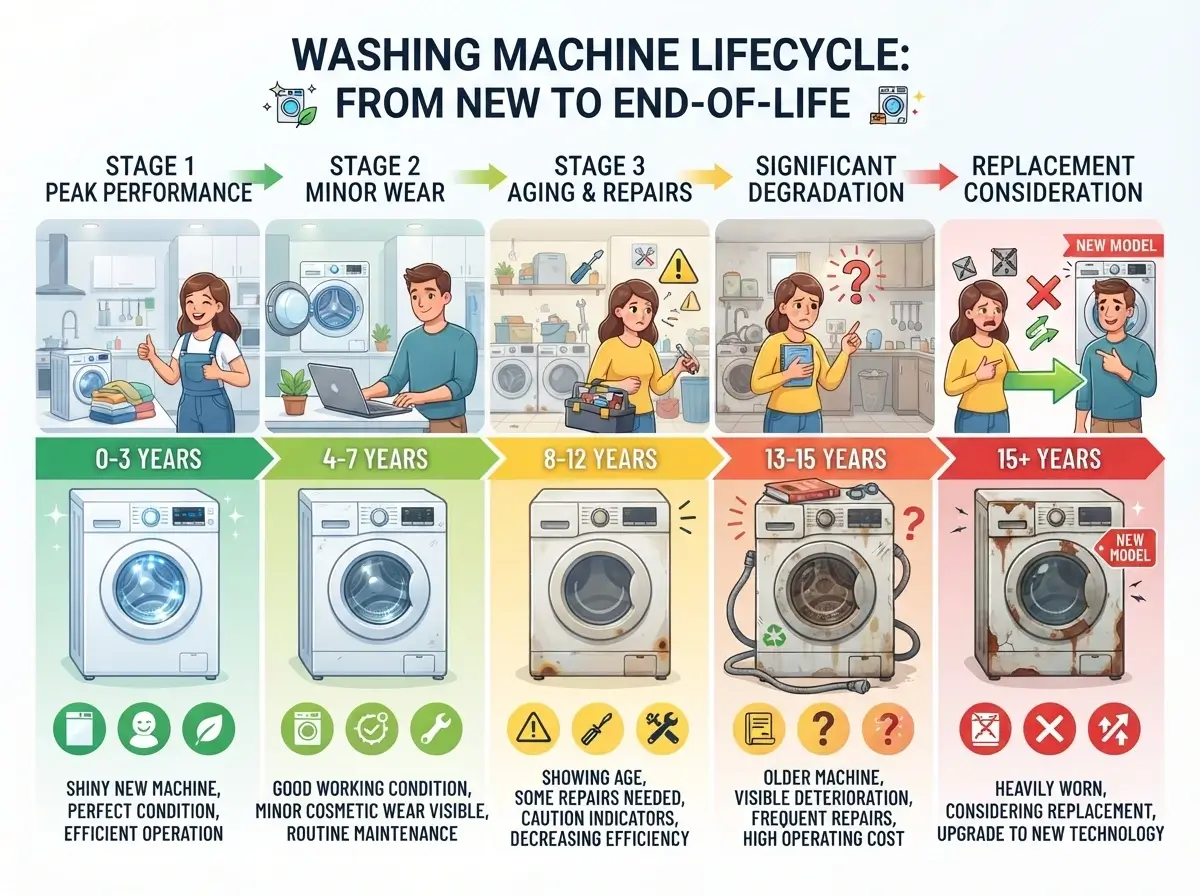
Most washers last about 10 to 15 years, and knowing your washer lifespan helps you decide when to repair the machine and when to replace it. A washer that is aging can still run fine for years, but it can also start costing more in repairs than it is worth. This guide walks you through what a normal washer lifespan looks like, what shortens it, and how to make a smart financial call when trouble starts.
A washer lifespan typically runs 10 to 15 years, depending on the type and how well it is maintained. Top load washers often last a bit longer than front load models. If a repair costs more than half the price of a new washer, replacing it usually makes better financial sense than fixing it again.
Average Washer Lifespan by Type: How Long Should Your Washer Last?
Washer lifespan changes based on the design of the machine. Some types have simpler parts, so they tend to hold up longer. Others offer better cleaning and water savings but need a bit more care to reach their full lifespan.
| Washer Type | Average Lifespan |
| Top Load | 12 to 15 years |
| Front Load | 10 to 12 years |
| High Efficiency | 10 to 15 years |
Top Load Washers
Top load washers use a simple design with fewer moving parts. A vertical drum and a center post move the clothes through the wash. This basic setup means less can go wrong over time. With regular care, a top load washer can reach 15 years of steady use, and repairs on these machines are often quick and affordable since the parts sit in easy reach.
Front Load Washers
Front load washers clean gently and use less water per load. The drum sits on its side and tumbles clothes instead of agitating them. This design saves water and treats fabric well, but the rubber door seal can trap moisture. Without regular cleaning, that moisture leads to mold and shortens the machine’s working life. Most front load washers reach 10 to 12 years with steady maintenance.
High Efficiency Washers
High efficiency washers, whether top load or front load, use sensors to control water levels and cycle times. These extra features can extend a washer lifespan when everything works well, but they also add more parts that can fail. Choosing the right detergent for a high efficiency model matters here, since regular detergent creates excess suds that clog internal parts.
What Affects How Long Your Washer Actually Lasts
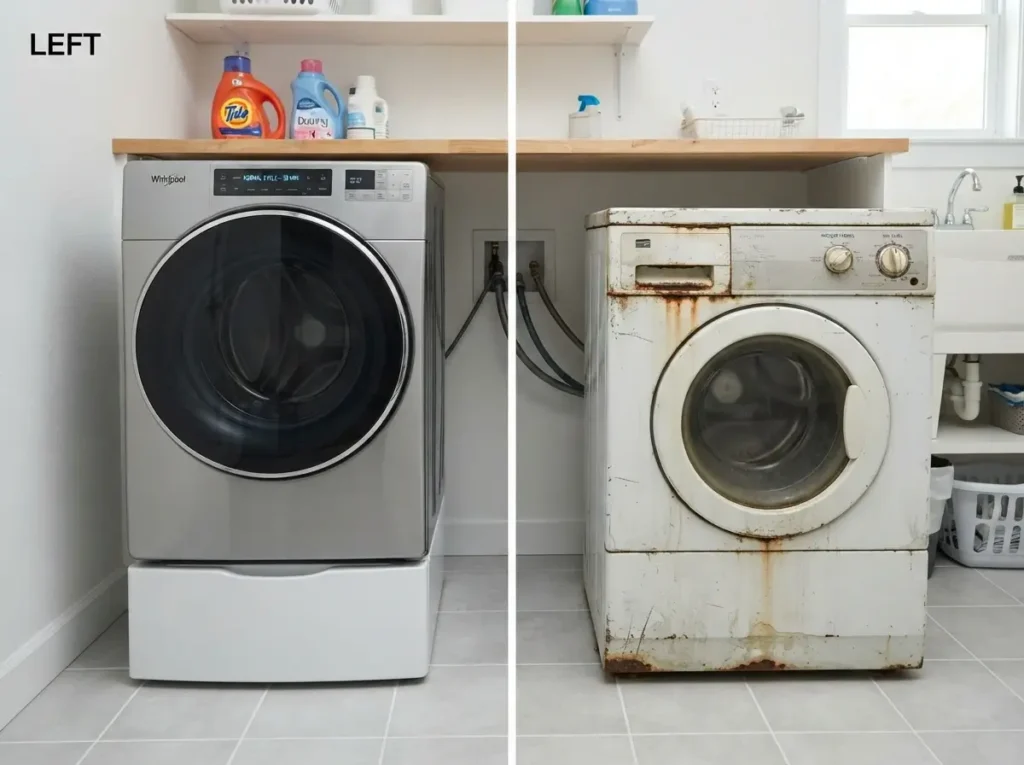
Several everyday habits shape how long a washer keeps running well.
Usage Frequency and Load Size
A washer running several loads a day wears down faster than one used a few times a week. Large households put more strain on the motor and drum bearings. Overloading the drum adds extra stress to the suspension system, while running mostly small, light loads can also cause uneven wear over time.
Water Quality and Detergent Use
Hard water leaves mineral buildup inside the drum and heating parts. This buildup lowers efficiency and adds strain to the machine. Using the correct detergent for your washer type also matters. Too much detergent leaves residue in hoses and valves, and that residue can clog parts and shorten washer lifespan.
Maintenance Habits
Simple routines protect a washer for years. Wiping the drum, checking hoses for cracks, and leaving the door open after each cycle all help air circulate and keep mold away. Skipping these steps often leads to costly repairs down the road.
Brand and Build Quality
Consumer Reports runs ongoing reliability surveys of washer owners and has found that brand plays a real role in how often a washer needs repairs. Their surveys show that some brands report far fewer issues with tangled clothes, odor, and mold than others, and that owner satisfaction varies a good deal across major washer brands. Choosing a well built model from the start can add years to your washer lifespan.
7 Signs It’s Time to Replace Your Washer
Watch for these warning signs. A few of them together often mean replacement makes more sense than another repair.
- Frequent repairs. Calling a technician several times in one year adds up fast.
- Excessive vibration. Heavy shaking during the spin cycle can point to worn suspension parts.
- Water leaks. Repeated leaks often mean a seal, hose, or internal part has failed.
- Visible rust. Rust on the drum or cabinet can spread and weaken the structure.
- Loud noises. Grinding or banging sounds usually mean the bearings or motor are wearing out.
- Poor cleaning results. Clothes coming out dingy despite the right detergent and settings point to a machine losing efficiency.
- Drum problems. A drum that wobbles, sticks, or spins unevenly signals a washer lifespan that is coming to an end.
If your washer is showing two or more of these signs, getting a professional inspection first can help confirm whether a repair still makes sense. A qualified washing machine repair technician can diagnose the exact issue before you decide.
Repair or Replace? The 50 Percent Rule and a Real Cost Comparison
Once your washer shows a few of these signs, the next step is a simple financial check.
The 50 Percent Rule Explained With an Example
The 50 percent rule works like this. If the repair costs more than half the price of a new comparable washer, replacement is the better financial choice. Say your washer needs a new motor priced at 350 dollars, and a similar new washer costs 600 dollars. That repair sits above the 50 percent mark, so buying new likely saves money over time. A smaller fix, like a new door seal at 120 dollars, stays well under that line and is worth doing.
Age Based Decision Checklist
Age adds useful context to the 50 percent rule.
- 0 to 5 years: Repair almost always makes sense.
- 5 to 8 years: Compare the repair cost against the machine’s remaining value before deciding.
- 8 to 10 years: Weigh repair cost carefully, since more parts may fail soon after.
- 10 years and older: Replacement usually offers better long term value, especially for major repairs.
The Five Year True Cost
Looking past one repair bill gives a clearer picture. An older washer often needs more than one fix within a few years, and each repair adds to the total cost. Older units also tend to use more water and electricity than a newer model built with modern efficiency in mind. Adding up expected repairs, higher utility bills, and the risk of water damage over five years often shows that replacement pays off sooner than expected.
How to Extend Your Washer’s Lifespan
A few habits go a long way toward protecting your investment.
- Avoid overloading the drum, and follow the load size listed in your owner’s manual.
- Use the correct type and amount of detergent for your washer.
- Check water supply hoses for cracks or bulges every few months.
- Leave the door open after each cycle so moisture can escape.
- Run a cleaning cycle monthly to clear out residue and odor.
These small steps protect your washer lifespan and reduce the chance of an early breakdown.
Disposing of Your Old Washer Responsibly
Once you replace an old washer, disposing of it the right way matters. Many local recycling centers accept washers for scrap metal, and some cities offer free pickup for large appliances. Retailers that deliver new washers often haul away the old one at little or no extra cost. Checking with your local waste management service before drop off can save a trip and confirm any fees involved.
Choosing an ENERGY STAR certified washer for your replacement can also lower water and energy use going forward, which adds savings on top of the upgrade itself.
Frequently Asked Questions
What is the average lifespan of a washing machine?
Most washing machines have a washer lifespan of 10 to 15 years. Top load models tend to last slightly longer than front load models, mainly due to their simpler design.
Is it worth repairing a 10 year old washing machine?
It depends on the repair cost and the machine’s condition. If the repair is affordable and the washer has run reliably, fixing it can still make sense. A costly repair on a machine this age often points toward replacement instead.
How much should washer repair cost before replacement?
A common guideline is the 50 percent rule. If the repair costs more than half the price of a new comparable washer, replacing the machine is usually the smarter financial move.
Can a leaking washing machine be repaired?
Yes, in most cases. Leaks often come from a damaged hose, worn door seal, or a faulty pump, and these parts can usually be replaced without buying a new washer.
Is it worth replacing washing machine bearings?
It depends on the age of the machine and whether other parts are also wearing out. On a newer washer, replacing the bearings is often worthwhile. On an older unit already showing several issues, it may be better to put that money toward a new washer.
How often should you replace your washing machine?
Most households replace a washer every 10 to 15 years, once repair costs rise or the machine starts showing several signs of wear at once.
If you are unsure whether your washer needs a repair or a replacement, reaching out for a quick professional opinion is the safest next step. You can contact us for an honest assessment before making a decision either way.