

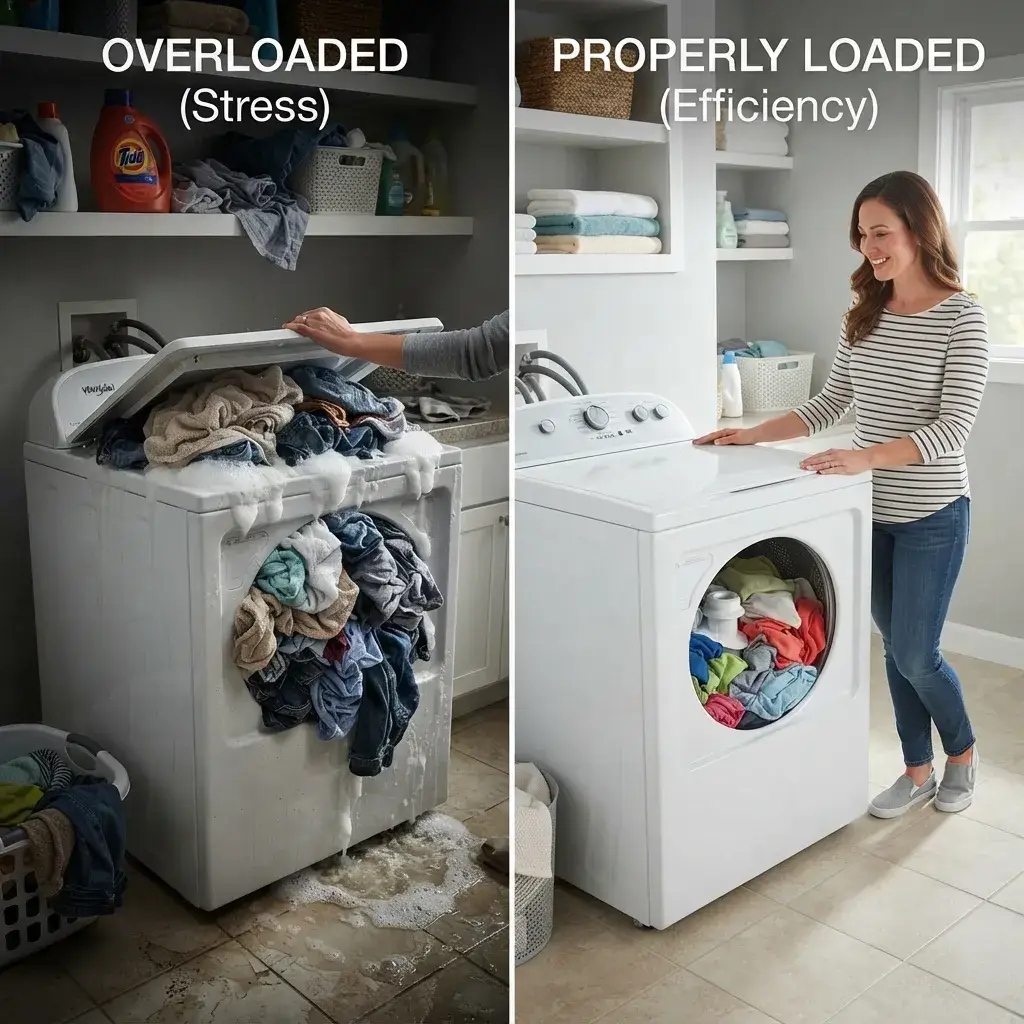
An overloaded washing machine cannot clean clothes properly and puts extra strain on the motor, drum, and bearings. Clothes need room to move through water and detergent, and a packed drum blocks that movement completely.
A washing machine is overloaded when clothes are packed so tightly they cannot move freely during the wash and spin cycles. A simple test is to press down on the load. If it feels tightly packed or you cannot fit your hand between the clothes and the drum wall, the load is too full.
Every washing machine has a rated capacity, and going past that limit changes how the whole cycle performs. Clothes need space to tumble, water needs room to circulate, and detergent needs contact with every item to lift dirt away. When you overload a washing machine, none of that happens the way it should. Below, we cover how to spot an overloaded washer, what overloading actually damages, and how to load both top-load and front-load machines correctly.
What Counts as an Overloaded Washing Machine?
A washing machine is overloaded once clothes fill the drum so completely that they cannot tumble freely. Capacity varies by model, so the exact weight limit depends on your washer’s size and type. A reliable rule works across most machines. Leave about six inches of open space between the top of the load and the top of the drum. Another quick check is the hand test. Place your hand inside the drum with your palm facing out. If your hand fits between the clothes and the drum wall, the load is fine. If it does not fit, remove some items before starting the cycle.
Your owner’s manual lists the exact capacity for your specific model, usually measured in cubic feet. Checking that number once gives you a clear baseline for every load going forward.
Signs Your Washing Machine Is Overloaded
Several clear signs point to an overloaded washing machine before you even open the manual.
- The door or lid won’t close easily: Struggling to shut it means too much laundry is inside.
- Clothes come out still wet, soapy, or dirty: Items packed too tightly cannot rinse or clean properly.
- The machine bangs, thumps, or squeals during the spin cycle: An unbalanced, overpacked load creates uneven weight distribution.
- The washer vibrates or shifts across the floor: Heavy, tightly packed loads throw the drum off balance.
- Small items disappear during the wash: Socks and other small pieces can get pulled into the drain line when clothes are packed too densely to move naturally.
Noticing even one of these signs is a good reason to remove some clothes and split the load in two.
What Happens When You Overload a Washing Machine?
Overloading a washing machine affects both your clothes and the machine itself.
- Poor cleaning results: Clothes need space to move through water and detergent. A packed drum keeps items bunched together, so water and detergent cannot reach every surface. Clothes often come out with soap residue or spots that were never fully rinsed.
- Fabric damage: Tightly packed clothes rub against each other with more friction instead of moving freely. Over time, this friction leads to pilling, thinning fabric, and small tears.
- Strain on the motor and drive parts: The motor works harder to turn a heavy, tightly packed drum. Repeated overloading wears down drive parts faster than normal use.
- Bearing and suspension wear: Bearings support the drum as it spins, and the suspension system keeps the machine steady. A consistently overloaded washer puts extra pressure on both, which shortens their lifespan.
- Drainage and leaking issues: A packed drum makes it harder for water to drain fully. Trapped water adds weight and can eventually lead to leaking around the door seal or base of the machine.
- Shorter washer lifespan: Combined, these effects add up. A washing machine that is regularly overloaded tends to need repairs sooner and does not last as long as one used within its rated capacity.
My Washer Won’t Spin or Drain After Overloading
Sometimes overloading causes an immediate stoppage rather than gradual wear. Here is what each specific symptom usually means.
Overloaded Washer Won’t Drain
A packed drum restricts water flow, so the drain pump struggles to clear water at the end of the cycle. Remove some laundry, redistribute the remaining items evenly, and restart the drain or spin cycle. If water still won’t clear, the drain pump or drain line may need a closer look.
Overloaded Washer Won’t Spin
Heavy, unevenly packed loads throw the drum off balance, and many washers pause the spin cycle automatically to prevent damage. Open the machine, rearrange the clothes so weight is spread evenly, and restart the cycle. If your washer still won’t spin after rebalancing the load, a mechanical issue may be behind it rather than the load itself.
Overloaded Washer Stopped Mid-Cycle
Many washers include a safety feature that halts the cycle when the load is too unbalanced or too heavy for the motor to manage safely. Redistribute the clothes evenly around the drum or agitator, remove a few items if the load still feels tight, and restart the cycle.
Overloaded Washer Making Noise or Vibrating
Loud banging or strong vibration almost always points to an unbalanced load rather than a mechanical fault. Pause the cycle, rearrange the clothes, and mix larger and smaller items together for better balance before restarting.
How to Properly Load a Washing Machine
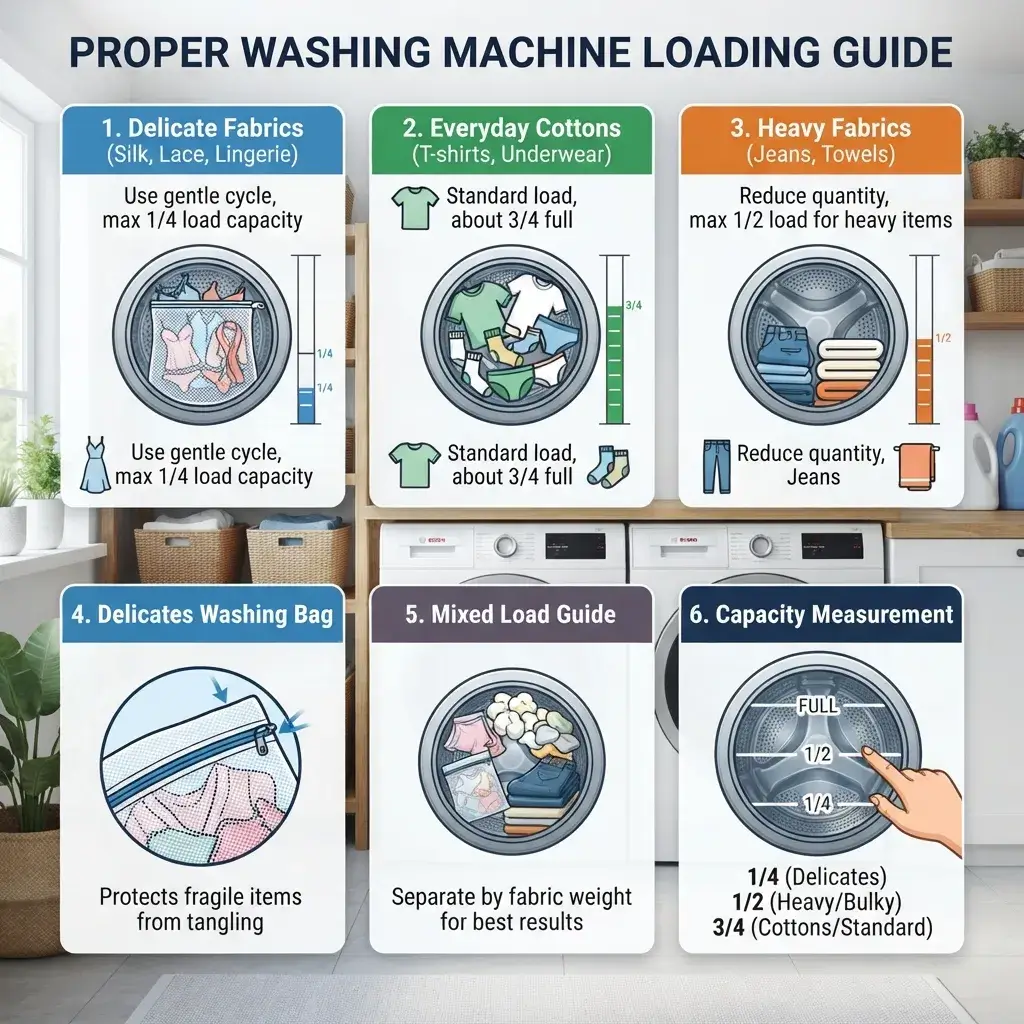
Loading technique differs slightly between top load and front load washers, so it helps to know your machine type before you start.
How to Load a Standard Top Load Washer
Standard top load washers use a center agitator to move clothes through the water. Add clothes evenly around the agitator rather than piling everything on one side. Mixing large items like towels with smaller items like shirts helps keep the load balanced. Fill the drum to about three quarters full, leaving room for clothes to tumble freely.
How to Load a High-Efficiency Top Load Washer
High-efficiency top load washers often use a low-profile wash plate instead of a tall center agitator. Place clothes around the edges of the wash plate rather than stacking them in the middle. Leave roughly six inches of space from the top of the load to the top of the drum. As with standard top load washers, mixing item sizes helps the load stay balanced during the spin cycle.
How to Load a Front Load Washer
Front load washers work best when clothes go in loosely, one item at a time, rather than dropped in as one bundle. This keeps items from tangling and helps the drum tumble them evenly. Fill the drum to about three quarters full and avoid packing clothes past the last row of holes near the door. If heavily soiled items are part of the load, place them in first so they stay in contact with water and detergent the longest.
Tips to Avoid Overloading Your Washing Machine
A few simple habits keep every load within a safe range.
- Split large amounts of laundry into two smaller loads instead of one oversized load.
- Use the hand test or the six inch rule before starting any cycle.
- Check your washer’s owner manual for its exact rated capacity in cubic feet.
- Sort heavier items like towels and jeans separately from lighter items so loads stay balanced by weight, not just size.
Following these habits protects both your clothes and your washing machine over the long run.
FAQs About Overloading a Washing Machine
How do I know if my washing machine is overloaded?
Press down on the load. If it feels tightly packed, or your hand cannot fit between the clothes and the drum wall, the washer is overloaded.
Can overloading a washer cause it to leak?
Yes. A packed drum can trap water and prevent full drainage, which sometimes leads to leaking around the door seal or base of the machine.
Can overloading a washing machine break it?
Yes. Repeated overloading strains the motor, bearings, and drive parts, which can lead to breakdowns and the need for repair over time.
What happens if I overload my washing machine?
Clothes may come out still dirty or soapy, the machine may vibrate or bang during the spin cycle, and the motor and other parts take on extra strain.
How do I fix an overloaded washing machine?
Remove some of the laundry, redistribute the remaining clothes evenly around the drum, and restart the cycle. This resolves most overload related stoppages right away.
Can overloading a washer cause a burning smell?
Yes, in some cases. A motor working harder than normal to turn an overloaded drum can overheat, which sometimes produces a burning smell. Stop the machine immediately if this happens.
What is considered overloading a washing machine?
A load counts as overloaded once clothes are packed so tightly they cannot tumble freely. The six-inch rule and the hand test are simple ways to check any load before starting the cycle.
Get Your Washer Fixed in Livonia, MI
Loading your washer correctly solves most vibration, noise, and drainage issues that come from overloading. If your washing machine keeps stopping, won’t spin, or shows signs of wear even after you’ve adjusted your load size, the problem may go beyond loading habits. If you are in the Livonia, Michigan area, Masters Appliance Repair Livonia can take a look at your washer and diagnose the exact cause.